If Urumqi is just your transit point on the way to somewhere else, you’re making a mistake. I thought the same before my first trip — and then spent two unplanned days there that changed how I think about the city.
This guide is part of our complete Xinjiang Travel Guide series for foreign travelers.
Urumqi is Xinjiang’s capital, and it shows you a side of the region that the postcard scenery of Kanas and Kashgar doesn’t. This is where modern Xinjiang actually lives: the tensions, the mixing of cultures, the real everyday life that most travel guides mention only in passing.
Why Urumqi Is Worth More Than a Layover
Most travelers treat Urumqi as a necessary evil — a place to change planes or trains before heading to “the real Xinjiang.” I get it. Urumqi isn’t Kashgar’s Old City. It isn’t Heavenly Lake‘s alpine scenery.
But it’s the best place to understand what Xinjiang actually is in 2026.
The city is Han Chinese, Uyghur, Kazakh, Hui, and half a dozen other groups living in the same blocks. You’ll see it in the food (the best Uyghur restaurants in Xinjiang are here, not in the tourist towns), in the markets, and in the face of the city after dark.
Spend a day here. You’ll understand the rest of your trip better.
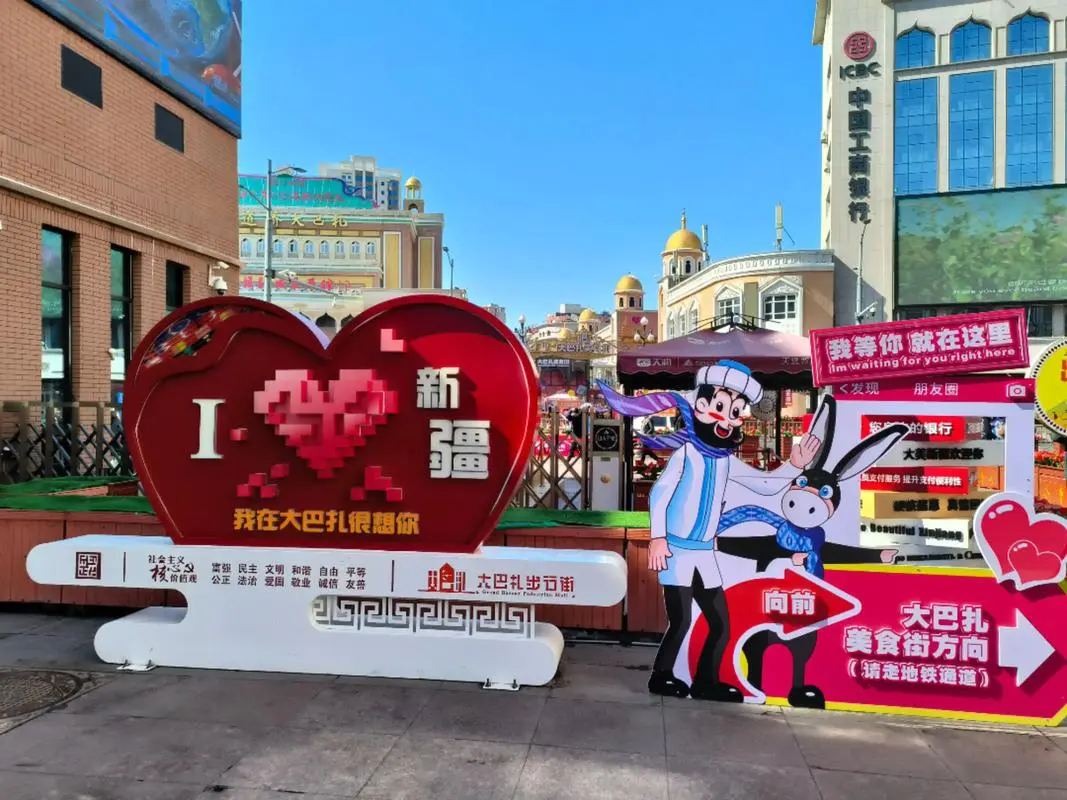
The International Bazaar (国际大巴扎)
This is the one thing everyone does in Urumqi, and it’s worth doing — but not the way the tour groups do it.
The Bazaar was rebuilt in the early 200s after a fire, and it shows: it’s a purpose-built tourist market, not an organic old market. That said, it’s still the best place in the city to buy dried fruits, nuts, carpets, and spices — and to get a sense of the scale of Xinjiang’s trade culture.
When to go: Go in the late afternoon. The tour groups clear out by 4 PM. After that, it’s mostly locals and a few independent travelers. The light is better for photos, and the shopkeepers have more time to talk (and are more likely to drop the “tourist price” by 20-30%).
What to buy: Saffron (check it’s real — the Bazaar has fakes), dried apricots from Turpan, and nuts. For carpets, know what you’re looking at — or bring someone who does.
What to skip: The “traditional Uyghur performances” in the evening. They’re expensive and staged. The real culture is in the side streets around the Bazaar, not on the stage.
Xinjiang Regional Museum (新疆博物馆)
If you go to one museum in Xinjiang, make it this one.
The museum covers the region’s history from 4,000-year-old mummies (the “Loulan Beauty” and others) to the Silk Road era to modern times. The mummy exhibit alone is worth the visit — these are the tarped bodies of people who lived in Xinjiang 2,000-4,000 years ago, with Caucasian features and clothing that still has color.
Practical note: The museum is free, but you need to book a time slot in advance (through their WeChat mini-program or website). Bring your passport.
How long to spend: 2-3 hours if you read the displays; half a day if you’re a history person.
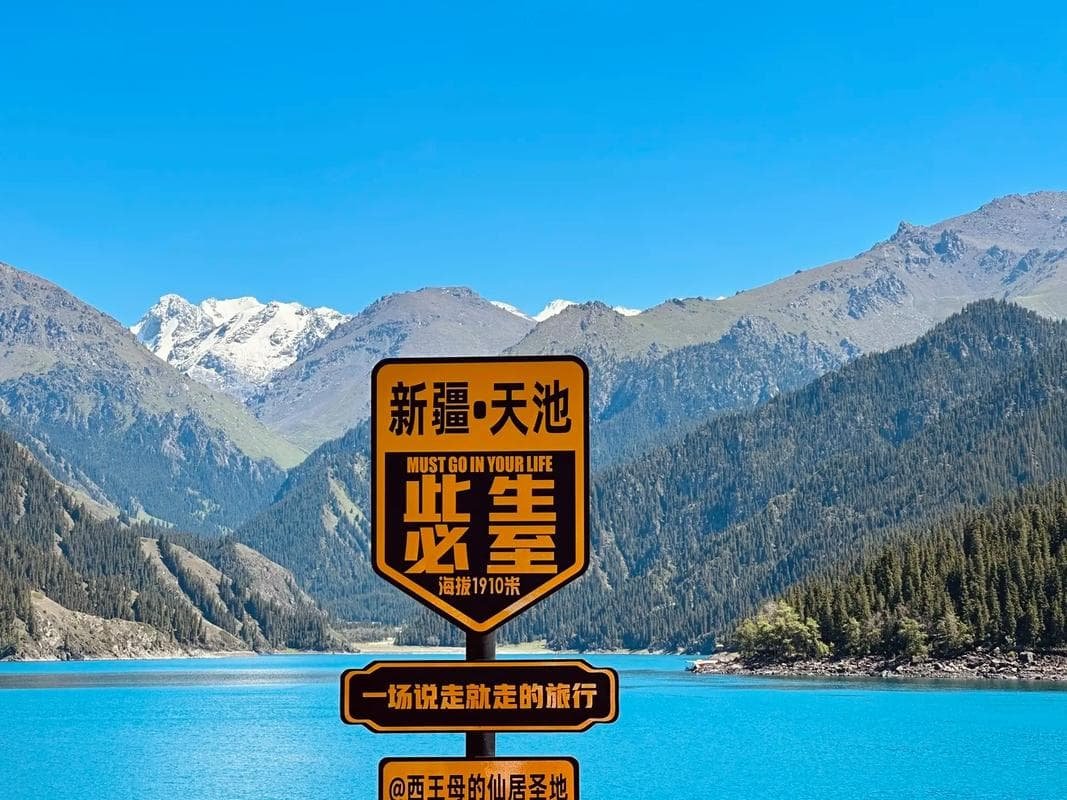
Heavenly Lake (Tianshan Tianchi) – Day Trip from Urumqi
Heavenly Lake is the most famous natural attraction near Urumqi, and it’s an easy day trip from the city (about 1.5 hours by car on a good day, longer if the traffic is bad).
I’ve written a separate guide to Heavenly Lake, but the short version: it’s a alpine lake at 1,900 meters, surrounded by spruce forests and the snow-capped Bogda Peak. It’s beautiful, but it’s also Xinjiang’s most visited natural site — go on a weekday if you can, and go early (the buses start running around 8 AM from Urumqi).
Getting there: You can hire a car (300-400 RMB round trip), take a tour bus from the Nanjiao Bus Station, or join a day tour from Urumqi (most hotels can arrange this).
The Food Scene
Urumqi has the best food in Xinjiang. Not because the ingredients are better (they’re from the same farms and pastures as everywhere else), but because the cooks are better. This is where the region’s culinary traditions have been refined for decades.
What to Eat
Uyghur pilaf (抓饭, zhuafan): Rice cooked with lamb, carrots, and onions. The best versions have the rice slightly crisped at the bottom of the pot. Try it at *Han Mumin Dapanji* or any place where you see locals lining up at lunchtime.
Big plate chicken (大盘鸡, dapanji): A Xinjiang classic — chicken, potatoes, and noodles in a spicy, cumin-heavy sauce. It was invented in Shawan, near Urumqi, and the versions in Urumqi are still the best.
Kebabs (烤肉, kaorou): Every second street corner in Urumqi has a kebab stall in the evening. The meat is lamb, cubed or sliced, grilled over charcoal. It’s cheap (5-10 RMB per skewer) and genuinely good.
Nang bread (馕, nang): Xinjiang’s staple bread. It’s a flat oven-baked bread, sometimes plain, sometimes with sesame or onion. Buy it fresh from any nang shop (they’re everywhere) for 3-5 RMB.
Where to Eat
The areas around the International Bazaar have the highest concentration of Uyghur restaurants, but they’re also the most tourist-oriented.
For more local experiences, head to Xinhua South Road (新华南路) or the streets around People’s Square (人民广场). These are where Urumqi people actually eat.
Budget tip: Look for places where the menu is only in Chinese and Uyghur, and where you’re the only non-local in the room. That’s where the good stuff is.
Getting Around Urumqi
Urumqi is spread out. The city center (where the Bazaar and most hotels are) is walkable, but getting to the museum, the train station, or the airport requires transport.
Metro: Urumqi has a small metro system (Lines 1 and 2). It’s clean, cheap (2-5 RMB per ride), and has signs in English (sort of). It’s useful for getting between the train station, the airport, and the city center.
Taxis: Plentiful and cheap. Make sure the driver uses the meter (they usually do). Short rides within the center should cost 10-15 RMB.
Bus: Extensive network, but all signs and announcements are in Chinese. Use Maps.me (download the offline map before you go) if you want to try the bus.
Ride-hailing: DiDi (the Chinese Uber) works in Urumqi. You’ll need the Chinese version of the app and a Chinese phone number, or have your hotel help you book.
Where to Stay
Urumqi has a full range of accommodation, from hostels to luxury hotels.
For convenience: Stay near People’s Square or the International Bazaar. You’ll be within walking distance of the main sights and have easy access to restaurants and transport.
For comfort: The Hilton Urumqi, Crowne Plaza, and Jinjiang Inn are all reliable international or national chains that accept foreign guests without hassle.
Budget option: There are several hostels and budget hotels near the Urumqi Railway Station, though the area isn’t the most atmospheric. Book through Booking.com or Agoda to ensure they accept foreigners.
One Practical Warning
Urumqi is at an altitude of 800-900 meters — not high enough for altitude sickness, but high enough that the sun is stronger than you might expect. Bring sunscreen. Also, the city is dry. Drink more water than you think you need.
Is Urumqi Safe?
Yes. The security presence is visible (it’s the capital of Xinjiang, after all), but crime rates are low. The main inconvenience is the security checks when entering hotels, shopping malls, and the metro. They’re routine — show your passport, put your bag through the X-ray, and you’re through.
The Bottom Line
Don’t rush through Urumqi. It’s not the most beautiful city in Xinjiang, but it’s the most useful one to understand the region. Spend a day. Eat well. Visit the museum. Then head to the scenery.
—
*This guide was updated in June 2026 based on first-hand travel experience.*