
Xinjiang Lamb Kebabs – Meat, Charcoal & Heat
Xinjiang Lamb Kebabs – Meat, Charcoal & Heat
Ask any traveller what they remember most about Xinjiang, and after the landscapes the answer is usually the smell of lamb sizzling over coals at dusk. The kawa – skewered, cumin-spiced lamb – is the region’s signature street food and, honestly, one of the best things you can eat in China. This is a practical, hungry traveller’s guide to what the kebabs are, why the charcoal and heat matter, where to find the best ones, and how to order like a local.
What Xinjiang Lamb Kebabs Actually Are
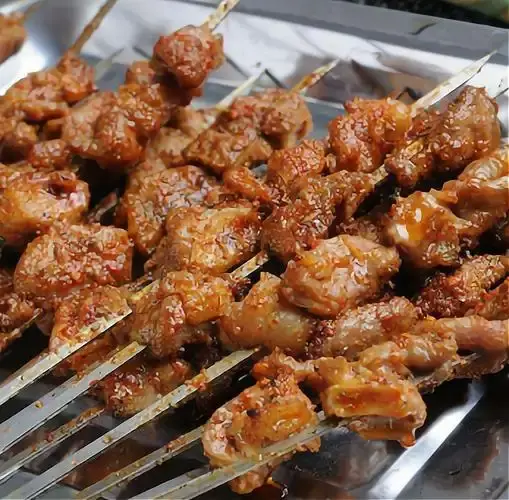
Forget the soft, saucy shish tawook of elsewhere. A Xinjiang chuan (串, skewer) is cubes of lamb – fat and lean threaded together – dusted with coarse salt, ground cumin, and chilli, then grilled over fierce charcoal. The fat renders and crisps, the cumin toasts, and the chilli lifts it without overwhelming. Served two or three pieces to a small flat skewer, they arrive hot, smoky, and addictive. Mutton from the region’s grassland herds has little of the gaminess Western lamb can have, which is why even lamb-skeptics convert here.
The Charcoal & Heat Difference
The magic is in the fire. Proper stalls use real charcoal or coal braziers, not gas, and the cook works the skewers fast, inches from the heat, basting with a brush of melted fat and flipping constantly. That intense, direct radiant heat is what gives the crust its colour and the inside its juiciness. “Heat” also means the spice level – most stalls offer a mild version by default, but you can ask for extra chilli (la) if you like it fierce.
Where to Eat Them
- Night markets: The great equaliser. Urumqi’s International Grand Bazaar area, the night markets of Kashgar’s old city, and Turpan town all buzz after dark with rows of identical braziers.
- Street corners: In any city, a cluster of skewers and a queue of locals is your sign of a good one.
- Restaurants: Sit-down Uyghur houses serve larger kawa plus the full table – cheaper by the plate than tourist spots near hotels.
Kashgar and Urumqi are the two food capitals; our safety guide notes that night markets are well-lit and family-friendly everywhere.
How They’re Made – The Spice Trinity
Three things define the flavour: cumin (the soul – toasted and ground), chilli (usually a mild dried-flake, not a hot sauce), and salt. Some stalls add a pinch of Sichuan pepper or a brush of pepper oil, but the classic is just those three plus the lamb’s own fat. Marinades are minimal; the quality of the meat and the fire do the work. Watch for the cook sprinkling cumin twice – once before and once after the flip.
The Wider Xinjiang Table
Kebabs are the gateway. Around them you’ll find:
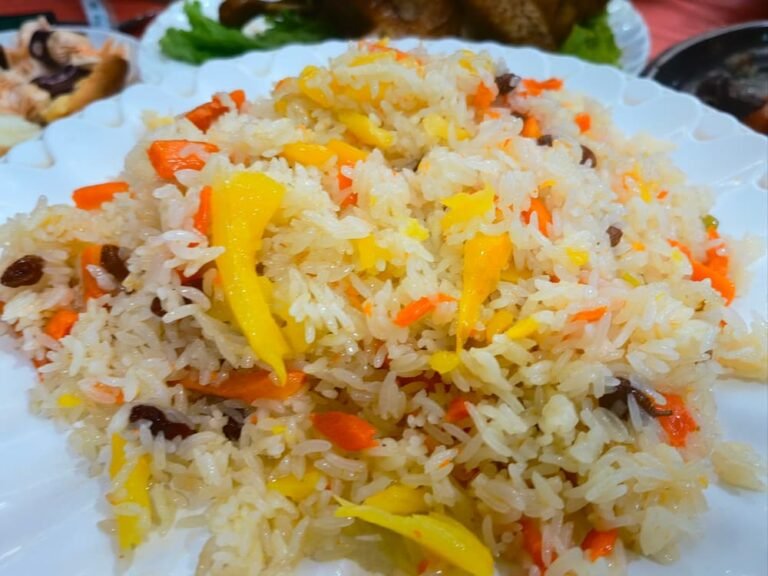
- Polo (plov): lamb and carrot rice cooked in a single pot – the Central Asian staple.
- Laghman: hand-pulled noodles with a tomato-lamb sauce.
- Naan: sesame flatbread baked in a tandoor-style tonur, perfect for scooping.
- Samsa: lamb-filled pastries baked against the oven wall.
- Dry-fried vegetables & yoghurt drinks: to cut the richness.
If you are budgeting a food tour, our Xinjiang budget guide shows typical street-food prices.
Etiquette & How to Order
Point at the skewers or hold up fingers for the count – “shi chuan” is ten. Pay by the stick; prices are posted. It is normal to stand and eat, then drift to the next stall. Tipping is not expected. Try a glass of cold ayran-style yoghurt drink or sweet tea to balance the heat. Vegetarians will struggle at a kebab stall, but every city has noodle and dumpling options nearby.
Best Cities for a Food Run
Urumqi for volume and variety, Kashgar for the deepest Uyghur old-city atmosphere, and Turpan for fruit-and-meat combos in season. All three sit naturally on a Xinjiang itinerary; see our best time to visit guide for the fruit calendar that pairs with your trip.
Frequently Asked Questions
Are Xinjiang kebabs safe to eat from street stalls?
Generally yes – high heat kills pathogens and turnover is fast at popular stalls. Choose busy stalls with a constant local crowd, and you will be fine.
How much do they cost?
Prices vary by city and exchange rate but are inexpensive; a filling night-market dinner of skewers, naan, and tea is one of the cheapest meals in China.
Is the meat really lamb, not something else?
In Xinjiang it is overwhelmingly sheep (lamb or mutton). The breed and grassland diet keep it mild. If you dislike lamb, look for chicken (jipu chuan) or vegetable skewers instead.
How spicy are they by default?
Mild to medium. Ask for “bu la” (not spicy) or “hen la” (very spicy) to tune it. The chilli is flavour, not just burn.
Written by Karl Huang – a Xinjiang-based travel writer who has eaten his way across every night market in the region since 2015.
Hungry for more than kebabs? We build food-focused private tours through Urumqi, Kashgar, and Turpan. Contact us here to plan a tasting route.