How to Get to Xinjiang: Flights, Trains, Roads, and Border Crossings
Xinjiang is remote – there’s no way around it. The capital, Ürümqi, is closer to Istanbul than it is to Shanghai. But that remoteness is exactly what makes the region special. Getting here is part of the adventure.
This guide covers every way to reach Xinjiang: flights, trains, driving routes, and border crossings. I’ve used all of them (except the Kazakhstan border crossing – paperwork is a nightmare). Here’s what you need to know.
—
Flying to Xinjiang (Fastest Option)
Flying is how most travelers arrive. Ürümqi Diwopu International Airport (URC) is the main hub, but there are smaller airports closer to specific destinations.
Main Airports in Xinjiang
| Airport | Code | Serves | Good For |
|———|——|——–|———-|
| Ürümqi Diwopu | URC | Northern + Southern Xinjiang | Most international and domestic flights |
| Kashgar | KHG | Southern Xinjiang | Kashgar Old City, Taxkorgan, Karakoram Highway |
| Kanas | KNS | Northern Xinjiang | Direct access to Kanas Lake (seasonal: June-October) |
| Yining | YIN | Northern Xinjiang (Ili Valley) | Sayram Lake, Nalati Grassland |
| Turpan | TLQ | Eastern Xinjiang | Turpan attractions (Grape Valley, Flaming Mountains) |
| Hetian (Hotan) | HTN | Southern Xinjiang | Hotan jade markets, desert routes |
—
Flying from Within China
From Beijing:
– Direct flights: 4-5 hours, 3-5 flights per day
– Price: ¥1,200-2,500 (one-way, economy)
– Airlines: Air China, China Southern, Hainan Airlines
From Shanghai:
– Direct flights: 5-6 hours, 2-3 flights per day
– Price: ¥1,500-3,000
– Note: Often more expensive than Beijing route
From Guangzhou / Shenzhen:
– Direct flights: 5-6 hours, 2-3 flights per day
– Price: ¥1,800-3,500
From Xi’an:
– Direct flights: 3.5 hours, multiple daily flights
– Price: ¥800-1,800
– Best value route – Xi’an is a good connecting point
From Chengdu:
– Direct flights: 3.5-4 hours, multiple daily flights
– Price: ¥900-2,000
– Good option if combining with Sichuan travel
Money-saving tip: Book 3-4 weeks in advance. Prices spike during Chinese holidays (National Day, Spring Festival). Use flight comparison sites like Qunar (去哪儿) or Ctrip (携程) – they have English versions.
—
Flying from Outside China
There are limited international flights to Xinjiang. Most international travelers connect through a major Chinese city.
Direct international flights to Ürümqi:
– Almaty, Kazakhstan – 2 hours, 3-4 flights per week
– Bishkek, Kyrgyzstan – 2.5 hours, 2 flights per week
– Tashkent, Uzbekistan – 2.5 hours, 2 flights per week (seasonal)
– Moscow, Russia – 5 hours, 2-3 flights per week
– Istanbul, Turkey – 6 hours, 2-3 flights per week
– Dubai, UAE – 5 hours, daily
For most international travelers: Fly to Beijing, Shanghai, or Guangzhou first, then connect to Ürümqi. The domestic connection adds 4-6 hours but gives you many more flight options.
—
Taking the Train to Xinjiang
The train is a classic way to reach Xinjiang. It’s slower than flying, but you’ll see the landscape change gradually – and overnight trains save on one night of accommodation.
High-Speed Rail (Lanzhou–Ürümqi)
The Lanzhou–Ürümqi high-speed line opened in 2014. It cut travel time significantly.
| Route | Travel Time | Train Type | Price (¥) |
|——-|————-|———–|———–|
| Beijing → Ürümqi | 12-14 hours | High-speed (G/D trains) | 800-1,200 |
| Shanghai → Ürümqi | 15-17 hours | High-speed + transfer in Xi’an or Lanzhou | 1,200-1,800 |
| Guangzhou → Ürümqi | 16-18 hours | High-speed + transfer | 1,500-2,200 |
| Xi’an → Ürümqi | 10-12 hours | High-speed | 600-900 |
| Lanzhou → Ürümqi | 8-9 hours | High-speed | 500-700 |
Booking: Through 12306.cn (Chinese railway official site) or Ctrip. English-friendly booking sites exist, but 12306 is cheapest.
—
Overnight Sleeper Trains (Traditional)
If you have more time and want the classic experience:
| Route | Travel Time | Sleeper Type | Price (¥) |
|——-|————-|————–|———–|
| Beijing → Ürümqi | 30-33 hours | Hard sleeper | 500-600 |
| Shanghai → Ürümqi | 35-38 hours | Hard sleeper | 600-700 |
| Guangzhou → Ürümqi | 40-45 hours | Hard sleeper | 700-800 |
Sleeper types explained:
– Hard seat (硬座): Not recommended for long journeys. You will regret this.
– Hard sleeper (硬卧): Open berth, 3 beds per section, no door. Fine for solo travelers.
– Soft sleeper (软卧): Enclosed 4-bed compartment, more privacy. Worth the upgrade for overnight trips.
Pro tip: The train is a great way to meet Chinese travelers. Bring snacks to share and your phrasebook app.
—
Driving to Xinjiang
If you’re already in China and have your own car (or are renting one), driving to Xinjiang is an epic road trip. The highways are excellent; the distances are long.
From Beijing
– Route: G7 Beijing–Ürümqi Expressway (the world’s longest desert highway)
– Distance: ~2,800 km
– Driving time: 30-35 hours (split over 3-4 days)
– Highlights: The G7 passes through the Gobi Desert – surreal, empty, beautiful
From Xi’an
– Route: G30 Lianyungang–Khorgos Expressway
– Distance: ~2,500 km
– Driving time: 28-32 hours (split over 3 days)
From Kashgar (if entering from Pakistan or Kyrgyzstan)
– Note: Cross-border driving is extremely complicated. You need special permits, a guide, and usually a tour group. Not recommended for independent travelers.
—
Renting a Car in Xinjiang
Can you rent a car and drive yourself? Yes, but:
1. International Driving Permit (IDP): China doesn’t recognize the IDP. You need a Chinese driver’s license.
2. Temporary driver’s license: Some cities (including Ürümqi) can issue a temporary license to foreign visitors with a valid license from their home country. It’s a bureaucratic process – allow 1-2 days.
3. Alternative: Hire a car with a driver. This is what most travelers do. Cost: ¥800-1,500/day. The driver handles navigation, parking, and sometimes acts as a basic guide.
My recommendation: Hire a car with driver. It’s not that much more expensive when you factor in insurance, parking, and navigation hassles – and it lets you focus on the scenery.
—
Crossing Borders into Xinjiang
Xinjiang borders eight countries. Some borders are open to tourists; others are restricted or closed.
Kazakhstan Border (Khorgos / Horgos)
– Status: Open to tourists with proper visas
– From: Yining → Khorgos → Zharkent (Kazakhstan)
– Requirements: Kazakhstan visa (or visa-free for many nationalities), passport
– Note: This is a popular crossing for overland travelers doing the “Silk Road route”
Kyrgyzstan Border (Torugart Pass / Irkeshtam)
– Status: Open seasonally (May – October, weather permitting)
– From: Kashgar → Irkeshtam → Osh (Kyrgyzstan)
– Requirements: Kyrgyzstan visa (check current visa-free agreements), organized tour sometimes required
– Note: High-altitude crossing (Torugart is at 3,752m). Not for the faint of heart.
Pakistan Border (Khunjerab Pass)
– Status: Open seasonally (May – October)
– From: Kashgar → Khunjerab Pass → Gilgit (Pakistan)
– Requirements: Pakistan visa, sometimes organized tour required
– Note: One of the highest border crossings in the world (4,693m). Spectacular scenery.
Other Borders
– Mongolia (Bulgan): Open seasonally, very remote, few facilities
– Tajikistan (Kulma): Open seasonally, requires permits
– Afghanistan, India, Russia: Closed or severely restricted
Important: Border regulations change. Check the latest requirements before planning a cross-border trip.
—
Getting Around Xinjiang (Once You’re Here)
Once you’ve arrived in Xinjiang, you still need to get around. The region is huge.
By Air (Domestic Flights)
Useful for covering long distances quickly:
| Route | Flight Time | Price (¥) |
|——-|————-|———–|
| Ürümqi → Kashgar | 2 hours | 400-1,000 |
| Ürümqi → Kanas | 1.5 hours (seasonal) | 500-1,200 |
| Ürümqi → Yining | 1 hour | 300-800 |
| Kashgar → Ürümqi | 2 hours | 400-1,000 |
By Train
Good for overnight routes:
| Route | Travel Time | Price (¥) |
|——-|————-|———–|
| Ürümqi → Kashgar | 12-15 hours (overnight) | 300-500 (hard sleeper) |
| Ürümqi → Yining | 5-6 hours | 150-250 |
| Kashgar → Hotan | 4-5 hours | 100-200 |
By Bus
The budget option, but slow:
| Route | Travel Time | Price (¥) |
|——-|————-|———–|
| Ürümqi → Kashgar | 14-16 hours | 200-300 |
| Ürümqi → Burqin (for Kanas) | 10-12 hours | 150-250 |
| Yining → Sayram Lake area | 2 hours | 40-60 |
Private Car with Driver
The most flexible option:
– Cost: ¥800-1,500 per day (8-10 hours, up to 300-400 km)
– What’s included: Driver, fuel, basic insurance
– What’s not included: Driver’s meals and accommodation (customary to cover these if the driver is with you for multiple days)
– Where to find: Through hotels, travel agencies, or platforms like Ctrip and Qyer
—
Sample Arrival Scenarios
Scenario 1: Flying from Beijing, focusing on Northern Xinjiang
1. Fly Beijing → Ürümqi (4-5 hours)
2. Spend 1 day in Ürümqi (acclimatize, buy supplies)
3. Hire car in Ürümqi → drive to Sayram Lake (6-7 hours)
4. Continue to Kanas (long drive, or fly Kanas Airport in season)
Scenario 2: Entering from Almaty, doing Southern Xinjiang
1. Fly Almaty → Ürümqi OR cross land border at Khorgos
2. Fly Ürümqi → Kashgar (2 hours)
3. Spend 3-4 days in Kashgar area
4. Fly or train back to Ürümqi
Scenario 3: Overland from Pakistan
1. Arrive at Khunjerab Pass (May-October only)
2. Taxi/bus to Kashgar (3-4 hours from the border)
3. Explore Southern Xinjiang
4. Fly out from Kashgar or Ürümqi
—
Common Mistakes
1. Booking flights too close to travel dates. Xinjiang flights fill up fast in summer and autumn. Book at least 3-4 weeks ahead.
2. Assuming visa-on-arrival is available. It’s not. Get your Chinese visa before arriving.
3. Underestimating travel times. Xinjiang is not like traveling in Europe, where you can hop between countries in 2 hours. Distances are vast. Plan accordingly.
4. Not carrying your passport. You need it for hotel check-in, some scenic area entries, and random security checks. Don’t leave it in your hotel room.
—
The Bottom Line
Getting to Xinjiang takes time and planning, but it’s worth it. My recommendation: fly to Ürümqi or Kashgar, then hire a car with driver to explore. The combination of fast long-distance travel + flexible local transport is the sweet spot for most travelers.
If you’re planning a Xinjiang travel budget, factor in that transportation will likely be your biggest expense. But that first view of the mountains? Priceless.
—
Written by the XinjiangTravels team, based on multiple trips to and around Xinjiang. For more planning help, check our best time to visit Xinjiang guide and Kanas Lake travel guide.
—
Word count: ~1,720 words
Target keyword: how to get to Xinjiang, Xinjiang transportation, flights to Xinjiang
Internal links: Is Xinjiang Safe guide, Xinjiang travel budget, Best time to visit, Kanas Lake guide
Images needed: Ürümqi airport, train station, G7 highway, map of Xinjiang airports
Planning your Xinjiang trip?
Tell us your travel dates and interests — we’ll send a tailor-made itinerary within 24 hours, free and with no obligation.
Choosing Your Entry Point: Urumqi, >Kashgar, or Yining
Urumqi is the default and the best-connected hub: it has the widest flight network, the high-speed rail from the east, and the largest pool of drivers and rental cars. If your trip covers both north and south, or you are unsure, enter and exit through Urumqi.
Kashgar makes sense when your trip is southern-focused — Old City, the Pamir, and the Sunday bazaar. Flying directly into Kashgar saves a 1,470 km round trip on the ground, and it puts you within a few hours of the Karakoram Highway instead of two days away.
Yining is the right entry when the trip is essentially the Yili grasslands plus Sayram. It is closer to the western green belt than Urumqi and lets you start driving immediately rather than crossing half the region first.

Sample Transport Budgets for Common Routes
Urumqi → Kashgar: a flight is typically ¥800–1,500 one way and takes about two hours; the alternative is a two-day drive or an overnight train. For most itineraries the flight is worth the money simply because it returns a full day to your trip.
Urumqi → Kanas: flying saves an 8–10 hour drive and is worth it on any trip under ten days. Driving suits travellers who specifically want the northern scenery en route and have the buffer days to absorb it.
Day rates: budget roughly ¥400–800 per day for a vehicle plus ¥300–500 per day for the driver, before fuel. Split four ways, that is the cheapest comfortable way to see the region; solo, it is the single largest line in your budget.
Border Permits and Checkpoints: What Actually Happens
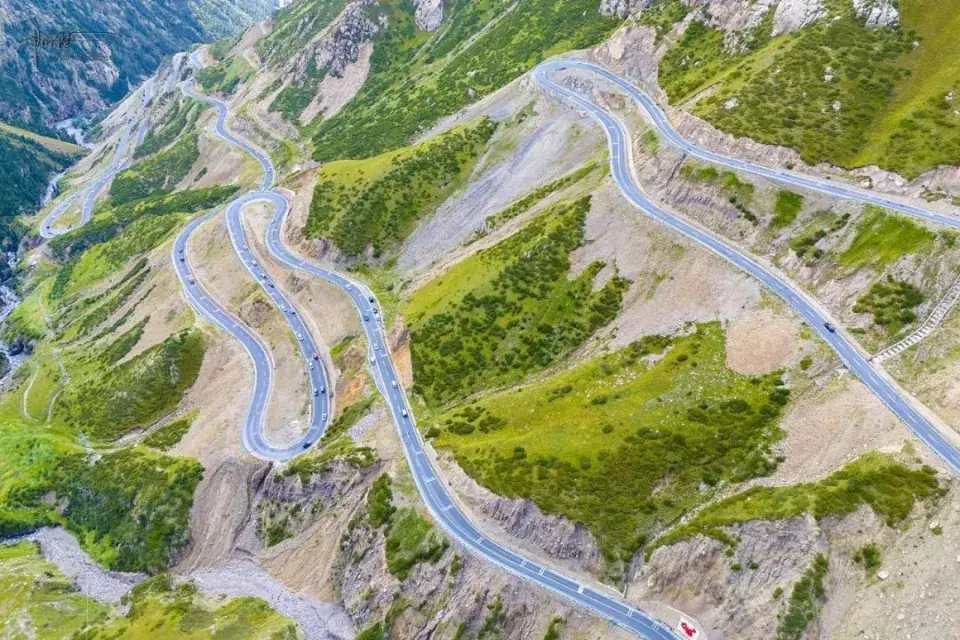
A border permit is required for Tashkurgan and the Pamir, and it is obtained in Kashgar with your passport — allow a day to process and carry it with you. The Karakoram Highway has checkpoints where both the permit and your passport are checked; this is routine and takes minutes.
Elsewhere in Xinjiang, checkpoints are ID stops rather than permit gates. Have your passport accessible rather than buried in luggage, and treat the stops as normal. Drivers familiar with the route handle them smoothly, which is one concrete argument for hiring locally on the southern routes.