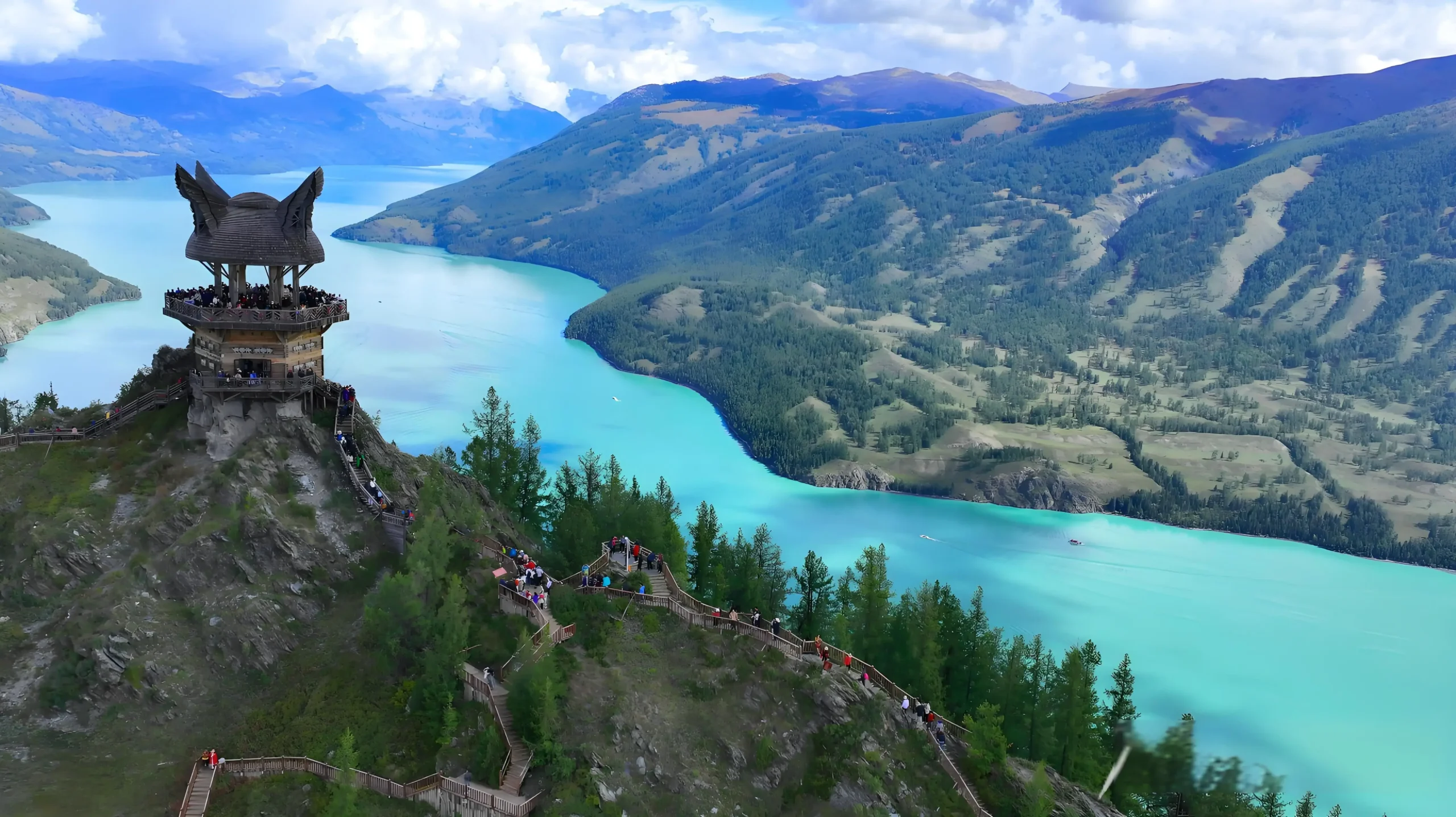
If Kanas Lake is Xinjiang’s most famous alpine lake, Sayram Lake (赛里木湖, Sàilǐmù Hú) is the one that makes you stop the car and just look.
This guide is part of our complete Xinjiang Travel Guide series for foreign travelers.
I remember the first time I saw it — we were driving the Dzungarian Gate (the highway that connects northern Xinjiang to the rest of China), and the lake appeared suddenly on the right: a huge expanse of blue-green water, ringed by snow-capped peaks, with no development on the shore. It looked like something out of New Zealand or Patagonia — not what I expected from a province most people associate with deserts and oases.
What Sayram Lake Actually Is
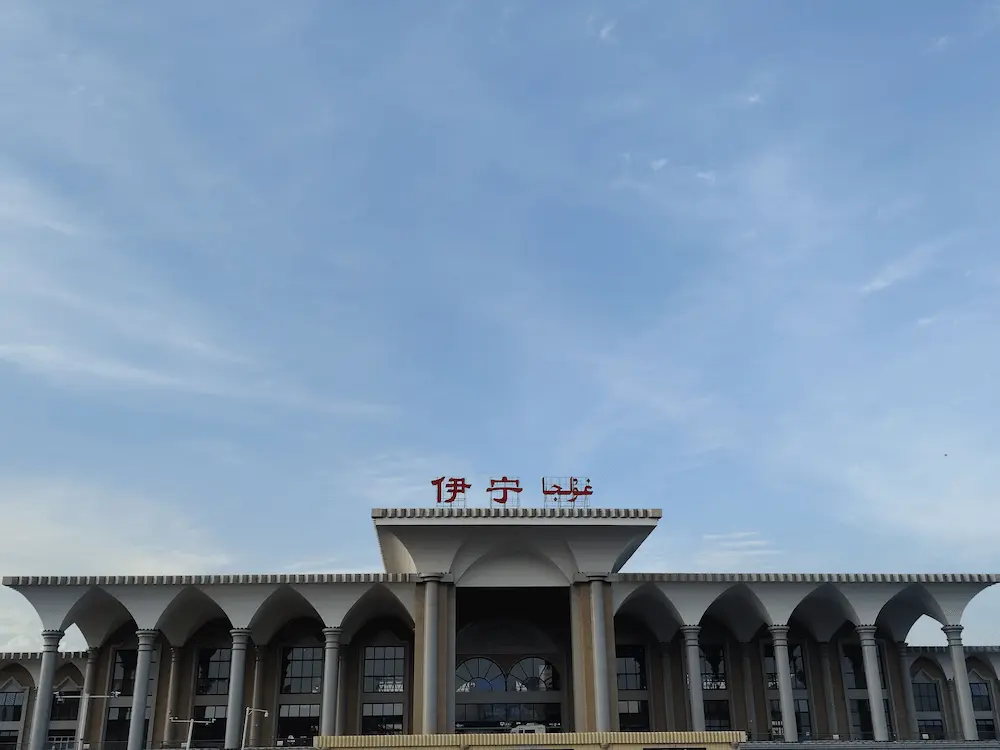
Sayram Lake is a high-alpine lake (2,073 meters) in the Dzungarian Gate, about 1.5 hours from Yining (the main city in the Ili region) by car. It’s China’s highest alpine lake, and it’s considered sacred by the local Mongolian and Kazakh communities.
The lake is about 29 km long and 16 km wide — bigger than Heavenly Lake, and less developed. There’s no boardwalk on the shore (unlike Heavenly Lake), and the infrastructure is minimal — which is exactly why it’s worth visiting.
Getting There
The standard way is by car from Yining (1.5 hours) or from Urumqi (6-7 hours, though most people break the trip with a night in Yining).
Options for Getting There
Hire a car with driver: 400-500 RMB per day from Yining. This is what most independent travelers do — it gives you the flexibility to stop at multiple viewpoints along the lake shore.
Join a day tour: Most hotels in Yining can arrange this. It’s usually a minibus with 6-12 people. Cost: 200-300 RMB per person including transport.
Drive yourself: You can’t. Foreigners can’t rent a car and drive it in China without a Chinese driver’s license.
The Scenery
Sayram Lake is famous for its color — a deep blue-green that changes with the light and the season. In June-July, the surrounding grasslands are green and dotted with wildflowers. In September-October, the grasslands turn gold, and the contrast with the blue water is spectacular.
The best viewpoints: The highway that runs along the north shore of the lake has multiple pull-off points. You don’t need to pay an entrance fee to see the lake from the highway — but if you want to go down to the shore, you’ll need to pay the entrance fee (75 RMB as of 2026).
When to Go
Best Months
June-July: The grasslands around the lake are green, and the wildflowers are in bloom. The weather is warm (15-25°C / 59-77°F during the day). This is peak season — expect other travelers, though far fewer than at Kanas or Heavenly Lake.
September-October: The best time. The weather is still decent (10-20°C / 50-68°F), the crowds are gone, and the light is incredible for photography.
November-May: The road is sometimes closed after heavy snow. Even if it’s open, the lake is frozen and the grasslands are brown. You can still visit, but dress warmly — it’s 2,073 meters and the wind cuts.
Time of Day
Go early. The light is best in the early morning (7-9 AM), and the tour groups haven’t arrived yet. Late afternoon (5-7 PM) is also good — the light on the water turns gold.
What to Do at the Lake
Most visitors spend 2-4 hours at Sayram Lake. That’s enough to drive along the shore road, stop at a few viewpoints, and maybe walk down to the water.
The Shore Road (环湖公路, Huán-Hú Gōnglù)
There’s a road that goes around part of the lake shore. You can drive it (if you have a car), or walk/bike it. The views are spectacular — every bend in the road gives you a different angle of the water and the surrounding peaks.
Walking Down to the Water
You can walk down to the shore from several points along the north shore road. It’s not a marked trail — you just walk down the slope. The water is cold (it’s a glacial lake), but in summer, some locals swim in it (I haven’t tried it — the water temperature is about 10°C / 50°F even in July).
The Mongolian Yurts (蒙古包, Měnggǔbāo)
There are a few yurt camps near the lake shore. You can stay in one (basic accommodation — a bed, a stove, and a lot of character) or just visit for a meal (the locals serve milk tea, lamb, and homemade cheese). It’s a good way to experience the nomadic culture of the region.
Where to Stay
There are a few options near the lake:
Yurt camps: Basic but atmospheric. You’ll sleep in a traditional Mongolian yurt, eat with the family, and wake up to the lake view. Cost: 100-200 RMB per person per night (including dinner and breakfast).
Hotels in Yining: More comfortable, and Yining is only 1.5 hours away. This is what most travelers do — stay in Yining, and do Sayram Lake as a day trip.
Luxury option: There’s a Sayram Lake Hotel near the shore (basic by international standards, but the location is unbeatable). Book in advance during peak season.
The Surrounding Area
Sayram Lake is on the way to Yining and the Ili Valley — one of the most beautiful regions in Xinjiang. If you’re going to Sayram Lake, spend a few days in the area:
- Yining city: Has a pleasant riverside park and some good Uyghur restaurants.
- Nalati Grassland (那拉提草原, Nālātí Cǎoyuán): One of the most famous grasslands in Xinjiang. It’s 3 hours from Yining by car.
- Huocheng Lavender (霍城薰衣草, Huòchéng Xūnyīcǎo): In June-July, the lavender fields near Huocheng (1 hour from Yining) are in bloom. It looks like Provence — but with Central Asian mountains in the background.
A Note on Border Permits
Sayram Lake is in a border-sensitive area, but you don’t need a special permit to visit the lake itself (as of 2026). The tourist areas are currently accessible without a permit for foreign visitors; this can change, so check before you go.
What does require a permit is traveling farther north to the Kazakh border areas. If you’re planning to go to those areas, you’ll need a Border Area Entry Permit.
The Bottom Line
Sayram Lake is less famous than Kanas or Heavenly Lake, and that’s exactly why you should go. It’s beautiful, it’s less crowded, and the surrounding area (the Ili Valley) is one of the most underrated regions in Xinjiang.
Spend a day here on your way between Urumqi and the Kazakh border. You won’t regret it.
—
*This guide was updated in June 2026 based on first-hand travel experience.*