
There’s a particular kind of freedom in pedaling across Xinjiang with everything you own in two panniers. I cycled a chunk of the G315 and later rode support on the G218, and both routes reward the fit and punish the unprepared. This isn’t weekend touring. It’s expedition cycling where the next water point can be a hundred kilometers away. If that sounds good, read on, because the gap between a great ride and a bad one here is almost all preparation.
The two roads offer different flavors. G315 is the desert crossing, flat and empty and wind-hammered. G218 is the northern arc, greener and hillier, looping past the desert’s top edge through Kazakh and Mongol country. Pick by temperament as much as by schedule.
The two routes
The G315 runs east-west along the southern edge, skirting the Taklamakan Desert through Hotan, Qiemo, and out toward Qinghai. The G218 arcs through the north, from Ili down past Karamay and around the desert’s northern rim. Different terrain, same demands on body and gear.
G315 – desert and silence
Flat, straight, and empty. The challenge is wind, heat, and the sheer length between towns. I met one other cyclist in a week and the silence became a companion. The reward is the sense of crossing something truly vast, with the dune line on your right for days.
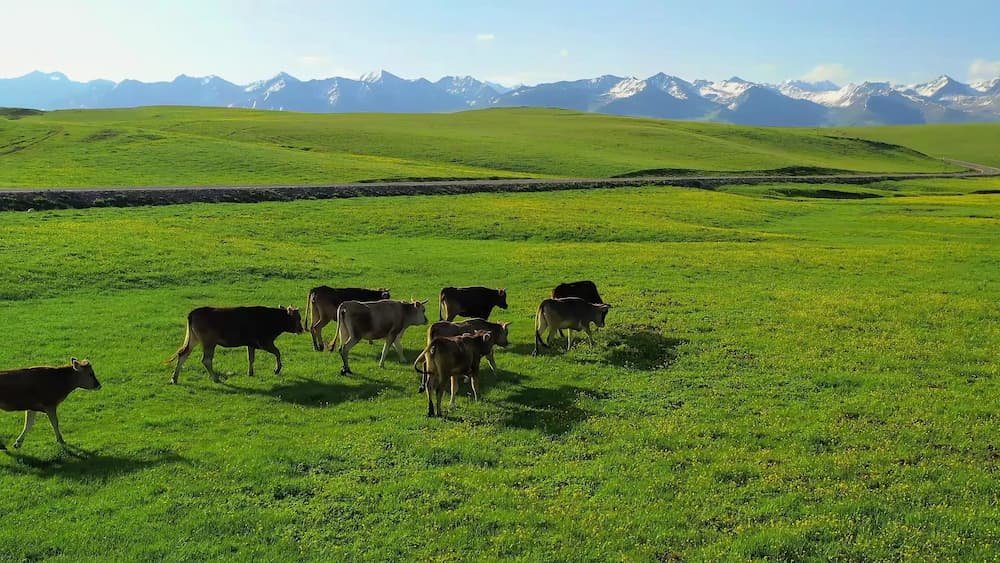
G218 – mountains and steppe
More climbing, greener, and prettier, but the passes tire you and the weather turns fast. Support matters more here because a mechanical on a pass leaves you exposed. The riding is more interesting, though, with switchbacks and river valleys instead of one long straight.
Difficulty and fitness
Neither route is technical; the roads are paved and wide. The difficulty is endurance, not skill, which fools people who can climb but can’t sit on a saddle for eight hours.
- G315 averages 80-130 km days with headwind risk that can halve your speed.
- G218 mixes 1500 m passes with long valley spins that lull you before the next climb.
- Train with back-to-back century rides before you come; don’t arrive untrained and hope the air helps, it won’t.
On G315 the wind pushed me backward at a standstill for ten minutes. I laughed, ate a date, and waited. The desert teaches patience faster than any coach, and the wait made the tailwind afterward feel like flying.
Support and logistics
A support vehicle changes everything. It carries water, spare wheels, and pulls you in if the heat wins, which on G315 in summer it sometimes does. Even strong riders use one here because the empty stretches don’t forgive mistakes.
- Hire a driver who speaks the local language for checkpoints and repairs; it smooths both.
- Pre-book Xinjiang accommodation in the few towns; guesthouses are basic but welcoming, and the hot shower after a desert day is religion.
- Tell the county police your plan at border-adjacent stretches; they appreciate knowing, and it keeps you legal.
Best season
Late May to early June, or September. Summer on G315 is dangerously hot; midday can hit 40 C and the road shimmers with heat that drains you. Winter closes passes and freezes the support vehicle out. The best time to visit Xinjiang for cycling is the shoulder, when roads are clear and the worst heat breaks.
What to carry
This is the list I wouldn’t ride without, and I’ve lent pieces to riders who skipped them and paid for it.
- Two full water capacity, at least 6 liters in the south where shade is rare.
- A real repair kit, spare folding tire, and a chain tool; a snapped link ends a solo ride.
- Offline GPS and a satellite messenger; signal is a myth out there and the messenger is your lifeline.
- Sun protection, the UV at altitude is brutal and a burned neck ruins the next day.
- Cash in small notes; card readers don’t work in villages and the noodle lady wants coins.
Permits and rules
Standard visa requirements cover entry, but the Pamir-adjacent parts of G315 near Tashkurgan need a border permit. The G218 stays clear of most restricted zones, which is one reason riders favor it, though you still pass through checked areas where a polite stop is required.
A sample riding day
To make the abstract concrete, a good G315 day starts before the heat, around 7 am, with a cold breakfast and full bottles. You ride the cool morning for four hours, cover 50-60 km, and stop at whatever shade you find for the midday bake. Then you roll the cooler late afternoon for another three hours and reach the next town by dusk, tired but not cooked. The rhythm matters more than the mileage; fighters who ride noon burn out by day four.
My toughest day
The worst stretch was a 140 km push on G315 with a steady headwind and a late start. I ran out of water at km 110 and rolled into the next town dry-mouthed and slow, the support car behind me the whole way. The lesson stuck: start at first light, carry more than you think, and respect the wind as a wall, not a nuisance. Every rider I’ve met who underestimated the desert came back with the same story, so treat the empty road as the adversary it is.
Practical FAQ
Do I need a guide? Not legally, but a support driver is wise on either route. Solo unsupported is for experienced expedition cyclists only, and even then I’d file a plan with someone who’ll notice if you vanish.
How do Xinjiang travel costs look for a bike trip? The bike and kit are yours; the big cost is the support vehicle and the flight for it home. Doing it unsupported cuts cost but raises risk, and the desert doesn’t care about your budget.
Can I combine this with a 10-day itinerary? Not really. These routes need two to three weeks minimum. Use the shorter plans for sightseeing, save cycling for a dedicated block when you can give it the time it demands.
Is the food an issue en route? Xinjiang food is cyclist gold, laghman noodles and kebabs refill you fast, but carry your own snacks for the empty middle stretches where the next town is a rumor.