Jiangjunshan Ski Resort Opens for 2026–2027: Altay’s City-Side Powder Is Live
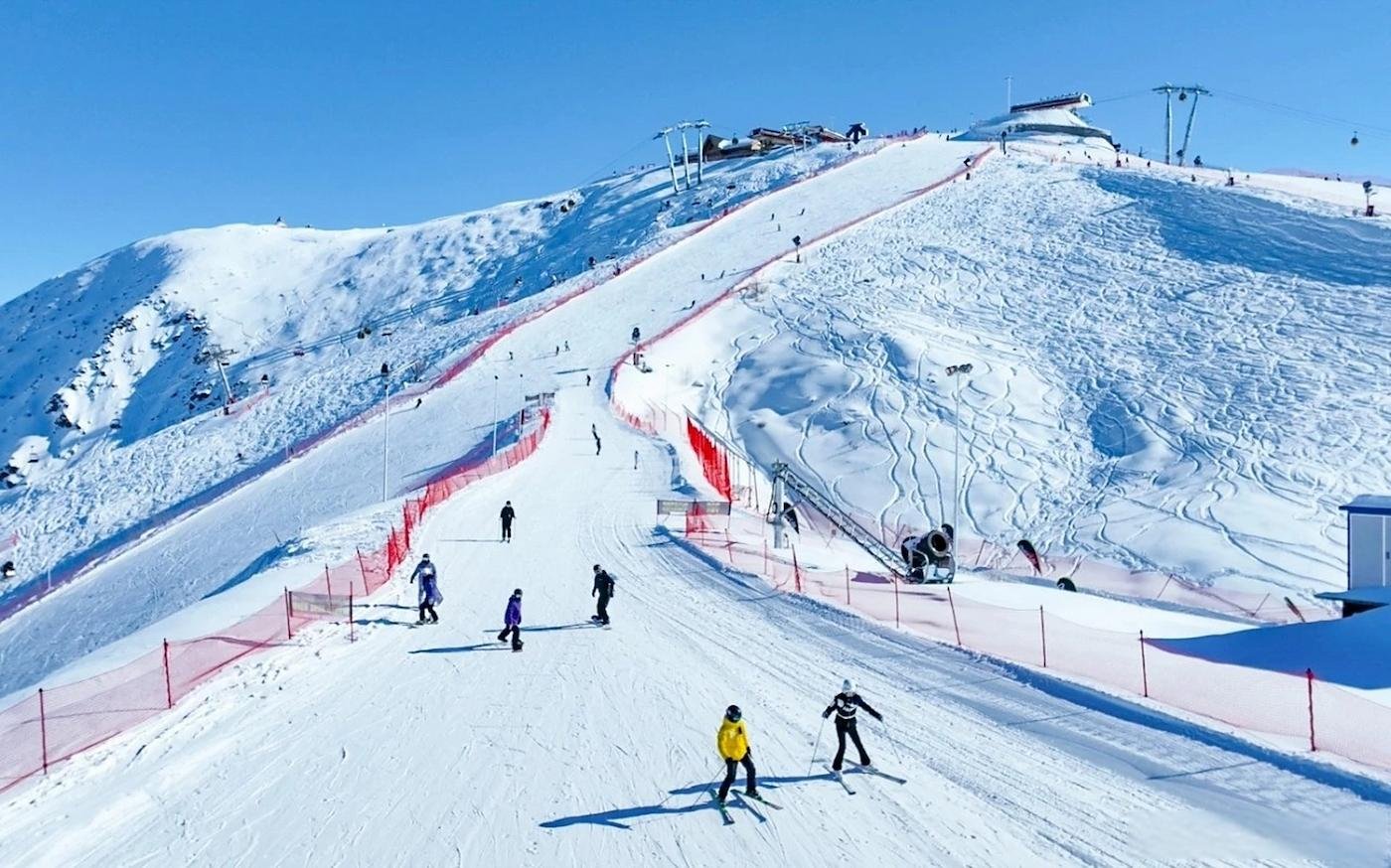
The 2026–2027 Xinjiang ski season just got a head start. On 30 October 2026 at 11:18 a.m., Jiangjunshan International Ski Resort (将军山国际滑雪度假区) in Altay City fired up its lifts and officially opened — more than two weeks earlier than the mid-November date most people were expecting. The first run of the season was the beginner boulevard KaiXuan Avenue (凯旋大道), served by a magic carpet while the resort waits for colder nights to lock in the higher terrain. If you have been eyeing a winter trip to China’s far northwest, this is the signal to start booking: the powder window is officially open, and the cheapest, quietest snow of the year is right now.
This guide is built from the resort’s own opening announcement and the published 2026–2027 Altay ticket schedule, plus verified hotel and booking data. It covers what actually changed this season, what it costs, the one free-ski trick almost every foreign visitor qualifies for, where to sleep within walking distance of the lifts, and exactly how to book without overpaying.
Why Jiangjunshan is the easiest ski trip in Xinjiang
Jiangjunshan is a 5S-grade resort sitting 1.6 km from the centre of Altay City — it is the only alpine ski resort in China built inside a city. That single fact reshapes the whole trip. You do not need a mountain transfer, a remote lodge, or a 90-minute shuttle from a regional airport. You land, check into a city hotel, and you are on a chairlift within ten minutes. For a first ski trip to Xinjiang, or for travellers who want city restaurants, heating, and a real bed after a day on the snow, it is the lowest-friction base in the region.
The mountain itself is no joke. For the 2026–2027 season Jiangjunshan reports 67 trails totalling 74 km, a snowmaking area of 2.36 million m², a skiable footprint of 5.26 million m², a maximum vertical drop of 460 m, 8 cable cars and 11 magic carpets, and an hourly lift capacity of 16,000 people. Two of its trails are FIS-certified — the only 5S resort in Xinjiang with two international-certified runs. The season runs from late October to early April, which gives you roughly five months of skiing if the cold holds.

What’s new for 2026–2027
The resort used the off-season to add capacity, and this is the part worth planning around:
- Six new trails open this season, including a dedicated carving avenue (刻滑大道) for carved-turn enthusiasts.
- The BK terrain park has been upgraded, and two more magic carpets were added to KaiXuan Avenue to shorten beginner queues.
- A new south-slope parking lot handles the growing drive-up crowd, and the athlete service centre that came online last season is fully operational.
- Night skiing remains a signature draw — you can ride the lifts after dark and look straight down over the city lights, which is a genuinely unusual view for an alpine resort.
When it opened on 30 October, only the beginner boulevard was running. The resort has been explicit that warmer-than-usual daytime temperatures are slowing the high-traffic openings, so treat the opening week as a soft launch: check the live open-run list before you commit, and expect the full mountain to unlock through November as temperatures drop.
Lift tickets — and the free-ski trick almost everyone misses
Here are the published 2026–2027 walk-up prices for Jiangjunshan (RMB, with the gear-rental price shown where it differs):
| Ticket | Weekday | Weekend | Holiday |
|—|—|—|—|
| Full-mountain day pass | ¥310 | ¥360 | ¥460 |
| Full-mountain day pass + gear | ¥360 | ¥410 | ¥510 |
| Beginner zone, 4-hour | ¥245 | ¥295 | ¥395 |
| Beginner zone, 4-hour + gear | ¥310 | ¥360 | ¥460 |
| Night session | ¥140 | ¥140 | ¥240 |
| Night session + gear | ¥160 | ¥260 | ¥160 |
“Holiday” means the New Year and Spring Festival periods, and those dates move with the official Chinese holiday calendar, so confirm before you lock a trip. If you only want to try skiing once, the beginner 4-hour ticket is the sweet spot.
The deal worth flying for: any visitor who flies into Altay Xuedu Airport (AAT), Burqin Kanas Airport, or Fuyun Koktokay Airport and shows a boarding pass dated within the previous five days can ski once for free at any of the four Altay resorts — Jiangjunshan, Koktokay, Jikepulin, or Qinggelang Langshan. For foreign travellers arriving on a flight, that is a free day of skiing at a 5S resort, no catch beyond the five-day window. Keep your boarding pass.
Where to stay: hotels right by the slopes
Because the resort is in the city, your accommodation choices range from ski-in convenience to ¥250 guesthouses, all within a short drive. Our broader Xinjiang accommodation guide covers every city in the region, but here is what is actually bookable right at the slopes this season, with verified starting prices.
Ski-in / resort-side. The Jiangjunshan Resort Hotel sits inside the resort complex (Building C), so you step out almost onto the beginner magic-carpet area. It is the only option where “ski-in, ski-out” is literally true, and it is the right pick if you are travelling with kids or want zero commute on a −25 °C morning.
Mid-range city hotels (4–5 star, 5–10 min drive). Altay has a surprising number of new international-brand and upscale local hotels, most of them opened in the last two years:
- Four Points by Sheraton Altay — from about ¥418, Marriott-branded, reliable heating and drying space.
- Jinjiang International Hotel — from about ¥289, courtyard-style, five minutes from the Ahe Highway.
- Zunmao Gem Hotel — from about ¥399, local “gem culture” theme, central.
- Jiyuhe Hotel — from about ¥458, the top-rated local luxury pick (4.8/5).
- UrCove by Hyatt Altay — from about ¥375, overlooks the mountain and sits by the Wubaili cultural street.
- Wanda Yuehua (near the airport) — from about ¥351, the logical choice if you land late; it is the closest decent hotel to AAT.
- Lavande (麗枫) and Orange Crystal (桔子水晶) — both from around ¥290–350, comfortable, new, free parking and airport pickup.
Budget guesthouses and homestays. If you are travelling light or staying a week, the guesthouse tier is excellent value: places like Shanfeng Laixin, Kaiyuan Hotel, and the Muhe and Shan Ye homestays run ¥250–330 with ratings of 4.7–4.9, free airport pickup, and in-house laundry — exactly what you want for drying ski gear. Many of these are 600–1,000 m from the main shopping area and a short taxi to the resort.
Booking a stay-and-ski package. The smart move for a multi-day trip is a “stay + lift ticket” (住滑) package rather than booking the two separately. Altay resorts and their partner hotels sell three flavours: a full-board plan (3–5 nights + daily passes + breakfast + shuttle, often with ¥300–500 saved per person versus separate booking), a light plan (one night + one day pass, ideal for families and beginners), and a consecutive-days pass for night-skiing regulars. Two things to confirm every time, because packages vary: ask whether the ticket is a full-day pass or a 4-hour pass, and whether it includes gear (boots, board, poles) — snowsuit, goggles, and helmet are almost always rented separately. Also pick a package with free cancellation 48 hours out or a storm-refund clause, since Altay weather can delay openings.
You can book any of the above on Ctrip (Trip.com), Meituan, or Tongcheng, or through the official Altay Tourism Group channel; the resort’s direct line is 400-111-0906, and the on-mountain desk answers at 0906-2192009 / 0906-2639999. Reserve early for New Year and Spring Festival — those two weeks sell out and prices climb 50–200%.
How to get there
Most international travellers route through Urumqi (URC) first, then connect north. If you are still working out >how to get to Xinjiang overall, Urumqi is the logical entry point before the short hop north. From early December, Urumqi–Altay flights run up to eight times a day and take about 1 hour 20 minutes; many stay-and-ski packages include free airport pickup. Altay Xuedu Airport (AAT) is only 14.8 km from Jiangjunshan, so a taxi or the resort shuttle gets you to the lifts in well under half an hour. A slower but scenic alternative is the overnight Urumqi–Altay train (around 9 hours 20 minutes) — a budget classic if you would rather sleep through the transfer.
If Altay is your priority, target a late-November to mid-December window: prices are softer than January peak, the crowds are thin, and you get first tracks on freshly groomed slopes. Build a day or two of buffer into your plan in case a warm spell delays the high-trail openings.
Who should come — and when
Jiangjunshan is the best Xinjiang ski base for first-timers, families, and anyone who wants a city base with nightlife and restaurants. It is gentler and more convenient than Koktokay (which has the big vertical and the freeride terrain) and far easier to reach than Jikepulin in Hemu (which sits inside the Kanas scenic area and needs a longer mountain transfer). If your trip is about Kanas Lake and the Hemu winter scenery, pair Jiangjunshan as your arrival ski day before heading deeper into the mountains.
For the best time to visit Xinjiang if snow is the goal, late November through February is prime; March is the budget shoulder with soft spring snow. Avoid counting on full beginner terrain in opening week — upper and north-facing runs open first, and the resort will tell you exactly which lifts are running.
On everyday safety: Altay is calm and visitor-friendly, and the real risks are cold and altitude-adjacent fatigue, not personal security. Dress for −20 °C to −30 °C nights, book a hotel with real heating and a drying area, and you will be fine. Our broader Is Xinjiang safe guide breaks the real risk list down in order of likelihood.