

- June to August: Go north (Ili grasslands, Sayram Lake, Kanas)
- September to October: Go north for autumn colors, or south for pleasant weather without the summer heat
- November to March: Go south (Kashgar, Taxkorgan) — it’s mild and you’ll have the places to yourself
- Spring (Mar-May): Layers. A down jacket for early spring, lighter layers by May. Dust storms are possible in April and May in southern Xinjiang — a scarf helps.
- Summer (Jun-Aug): Sunscreen (the UV is intense), a hat, and light clothes for the day. Bring a jacket for evenings — even in July, it can drop to 15°C at night in the mountains.
- Autumn (Sep-Oct): Layers again. October gets cold at night, especially in the north.
- Winter (Nov-Feb): Serious winter gear if you’re going north. For southern Xinjiang, a warm coat and layers are enough for the day; heated hotels and indoor spaces make it manageable.
- Best overall weather: May and September (mild, dry, fewer tourists)
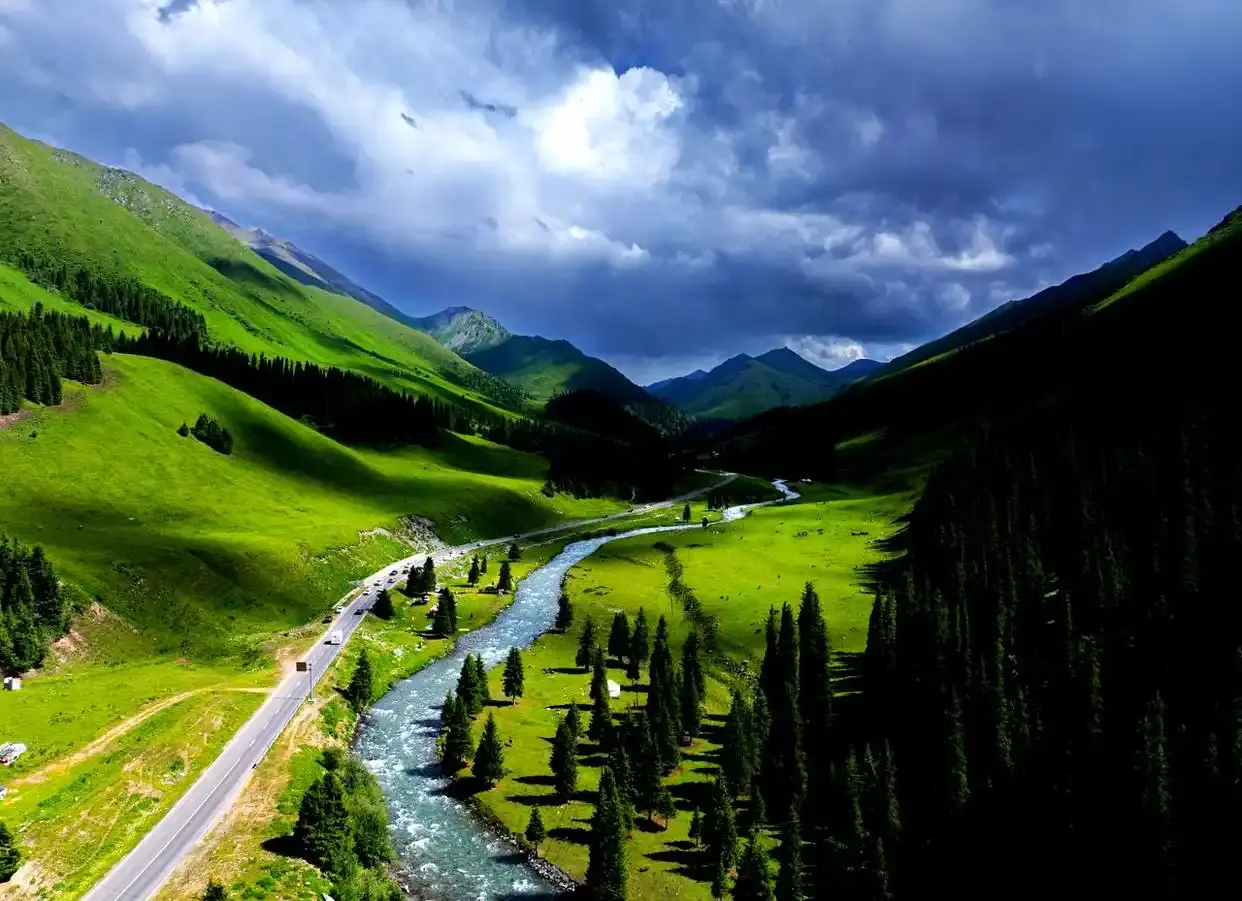
- Best for green grasslands and lavender: June to August (northern Xinjiang)
- Best for autumn colors: Late September to mid-October (Kanas, poplar forests)
- Best for snow and skiing: December to March (Altai region)
- Warmest in winter: Southern Xinjiang (Kashgar, Turpan) stays above freezing most days
- June to August: Go north (Ili grasslands, Sayram Lake, Kanas)
- September to October: Go north for autumn colors, or south for pleasant weather without the summer heat
- November to March: Go south (Kashgar, Taxkorgan) — it’s mild and you’ll have the places to yourself
- Spring (Mar-May): Layers. A down jacket for early spring, lighter layers by May. Dust storms are possible in April and May in southern Xinjiang — a scarf helps.
- Summer (Jun-Aug): Sunscreen (the UV is intense), a hat, and light clothes for the day. Bring a jacket for evenings — even in July, it can drop to 15°C at night in the mountains.
- Autumn (Sep-Oct): Layers again. October gets cold at night, especially in the north.
- Winter (Nov-Feb): Serious winter gear if you’re going north. For southern Xinjiang, a warm coat and layers are enough for the day; heated hotels and indoor spaces make it manageable.
- Best overall weather: May and September (mild, dry, fewer tourists)
- Best for green grasslands and lavender: June to August (northern Xinjiang)
- Best for autumn colors: Late September to mid-October (Kanas, poplar forests)
- Best for snow and skiing: December to March (Altai region)
- Warmest in winter: Southern Xinjiang (Kashgar, Turpan) stays above freezing most days
- June to August: Go north (Ili grasslands, Sayram Lake, Kanas)
- September to October: Go north for autumn colors, or south for pleasant weather without the summer heat
- November to March: Go south (Kashgar, Taxkorgan) — it’s mild and you’ll have the places to yourself
- Spring (Mar-May): Layers. A down jacket for early spring, lighter layers by May. Dust storms are possible in April and May in southern Xinjiang — a scarf helps.
- Summer (Jun-Aug): Sunscreen (the UV is intense), a hat, and light clothes for the day. Bring a jacket for evenings — even in July, it can drop to 15°C at night in the mountains.
- Autumn (Sep-Oct): Layers again. October gets cold at night, especially in the north.
- Winter (Nov-Feb): Serious winter gear if you’re going north. For southern Xinjiang, a warm coat and layers are enough for the day; heated hotels and indoor spaces make it manageable.
- Best overall weather: May and September (mild, dry, fewer tourists)
- Best for green grasslands and lavender: June to August (northern Xinjiang)
- Best for autumn colors: Late September to mid-October (Kanas, poplar forests)
- Best for snow and skiing: December to March (Altai region)
- Warmest in winter: Southern Xinjiang (Kashgar, Turpan) stays above freezing most days
- June to August: Go north (Ili grasslands, Sayram Lake, Kanas)
- September to October: Go north for autumn colors, or south for pleasant weather without the summer heat
- November to March: Go south (Kashgar, Taxkorgan) — it’s mild and you’ll have the places to yourself
- Spring (Mar-May): Layers. A down jacket for early spring, lighter layers by May. Dust storms are possible in April and May in southern Xinjiang — a scarf helps.
- Summer (Jun-Aug): Sunscreen (the UV is intense), a hat, and light clothes for the day. Bring a jacket for evenings — even in July, it can drop to 15°C at night in the mountains.
- Autumn (Sep-Oct): Layers again. October gets cold at night, especially in the north.
- Winter (Nov-Feb): Serious winter gear if you’re going north. For southern Xinjiang, a warm coat and layers are enough for the day; heated hotels and indoor spaces make it manageable.
- Best overall weather: May and September (mild, dry, fewer tourists)
- Best for green grasslands and lavender: June to August (northern Xinjiang)
- Best for autumn colors: Late September to mid-October (Kanas, poplar forests)
- Best for snow and skiing: December to March (Altai region)
- Warmest in winter: Southern Xinjiang (Kashgar, Turpan) stays above freezing most days
- June to August: Go north (Ili grasslands, Sayram Lake, Kanas)
- September to October: Go north for autumn colors, or south for pleasant weather without the summer heat
- November to March: Go south (Kashgar, Taxkorgan) — it’s mild and you’ll have the places to yourself
- Spring (Mar-May): Layers. A down jacket for early spring, lighter layers by May. Dust storms are possible in April and May in southern Xinjiang — a scarf helps.
- Summer (Jun-Aug): Sunscreen (the UV is intense), a hat, and light clothes for the day. Bring a jacket for evenings — even in July, it can drop to 15°C at night in the mountains.
- Autumn (Sep-Oct): Layers again. October gets cold at night, especially in the north.
- Winter (Nov-Feb): Serious winter gear if you’re going north. For southern Xinjiang, a warm coat and layers are enough for the day; heated hotels and indoor spaces make it manageable.
- Best overall weather: May and September (mild, dry, fewer tourists)
- Best for green grasslands and lavender: June to August (northern Xinjiang)
- Best for autumn colors: Late September to mid-October (Kanas, poplar forests)
- Best for snow and skiing: December to March (Altai region)
- Warmest in winter: Southern Xinjiang (Kashgar, Turpan) stays above freezing most days
- June to August: Go north (Ili grasslands, Sayram Lake, Kanas)
- September to October: Go north for autumn colors, or south for pleasant weather without the summer heat
- November to March: Go south (Kashgar, Taxkorgan) — it’s mild and you’ll have the places to yourself
- Spring (Mar-May): Layers. A down jacket for early spring, lighter layers by May. Dust storms are possible in April and May in southern Xinjiang — a scarf helps.
- Summer (Jun-Aug): Sunscreen (the UV is intense), a hat, and light clothes for the day. Bring a jacket for evenings — even in July, it can drop to 15°C at night in the mountains.
- Autumn (Sep-Oct): Layers again. October gets cold at night, especially in the north.
- Winter (Nov-Feb): Serious winter gear if you’re going north. For southern Xinjiang, a warm coat and layers are enough for the day; heated hotels and indoor spaces make it manageable.
- Best overall weather: May and September (mild, dry, fewer tourists)
- Best for green grasslands and lavender: June to August (northern Xinjiang)
- Best for autumn colors: Late September to mid-October (Kanas, poplar forests)
- Best for snow and skiing: December to March (Altai region)
- Warmest in winter: Southern Xinjiang (Kashgar, Turpan) stays above freezing most days
- June to August: Go north (Ili grasslands, Sayram Lake, Kanas)
- September to October: Go north for autumn colors, or south for pleasant weather without the summer heat
- November to March: Go south (Kashgar, Taxkorgan) — it’s mild and you’ll have the places to yourself
- Spring (Mar-May): Layers. A down jacket for early spring, lighter layers by May. Dust storms are possible in April and May in southern Xinjiang — a scarf helps.
- Summer (Jun-Aug): Sunscreen (the UV is intense), a hat, and light clothes for the day. Bring a jacket for evenings — even in July, it can drop to 15°C at night in the mountains.
- Autumn (Sep-Oct): Layers again. October gets cold at night, especially in the north.
- Winter (Nov-Feb): Serious winter gear if you’re going north. For southern Xinjiang, a warm coat and layers are enough for the day; heated hotels and indoor spaces make it manageable.
- Best overall weather: May and September (mild, dry, fewer tourists)
- Best for green grasslands and lavender: June to August (northern Xinjiang)
- Best for autumn colors: Late September to mid-October (Kanas, poplar forests)
- Best for snow and skiing: December to March (Altai region)
- Warmest in winter: Southern Xinjiang (Kashgar, Turpan) stays above freezing most days
- June to August: Go north (Ili grasslands, Sayram Lake, Kanas)
- September to October: Go north for autumn colors, or south for pleasant weather without the summer heat
- November to March: Go south (Kashgar, Taxkorgan) — it’s mild and you’ll have the places to yourself
- Spring (Mar-May): Layers. A down jacket for early spring, lighter layers by May. Dust storms are possible in April and May in southern Xinjiang — a scarf helps.
- Summer (Jun-Aug): Sunscreen (the UV is intense), a hat, and light clothes for the day. Bring a jacket for evenings — even in July, it can drop to 15°C at night in the mountains.
- Autumn (Sep-Oct): Layers again. October gets cold at night, especially in the north.
- Winter (Nov-Feb): Serious winter gear if you’re going north. For southern Xinjiang, a warm coat and layers are enough for the day; heated hotels and indoor spaces make it manageable.
- Best overall weather: May and September (mild, dry, fewer tourists)
- Best for green grasslands and lavender: June to August (northern Xinjiang)
- Best for autumn colors: Late September to mid-October (Kanas, poplar forests)
- Best for snow and skiing: December to March (Altai region)
- Warmest in winter: Southern Xinjiang (Kashgar, Turpan) stays above freezing most days
- June to August: Go north (Ili grasslands, Sayram Lake, Kanas)
- September to October: Go north for autumn colors, or south for pleasant weather without the summer heat
- November to March: Go south (Kashgar, Taxkorgan) — it’s mild and you’ll have the places to yourself
- Spring (Mar-May): Layers. A down jacket for early spring, lighter layers by May. Dust storms are possible in April and May in southern Xinjiang — a scarf helps.
- Summer (Jun-Aug): Sunscreen (the UV is intense), a hat, and light clothes for the day. Bring a jacket for evenings — even in July, it can drop to 15°C at night in the mountains.
- Autumn (Sep-Oct): Layers again. October gets cold at night, especially in the north.
- Winter (Nov-Feb): Serious winter gear if you’re going north. For southern Xinjiang, a warm coat and layers are enough for the day; heated hotels and indoor spaces make it manageable.
- Best overall weather: May and September (mild, dry, fewer tourists)
- Best for green grasslands and lavender: June to August (northern Xinjiang)
- Best for autumn colors: Late September to mid-October (Kanas, poplar forests)
- Best for snow and skiing: December to March (Altai region)
- Warmest in winter: Southern Xinjiang (Kashgar, Turpan) stays above freezing most days
- June to August: Go north (Ili grasslands, Sayram Lake, Kanas)
- September to October: Go north for autumn colors, or south for pleasant weather without the summer heat
- November to March: Go south (Kashgar, Taxkorgan) — it’s mild and you’ll have the places to yourself
- Spring (Mar-May): Layers. A down jacket for early spring, lighter layers by May. Dust storms are possible in April and May in southern Xinjiang — a scarf helps.
- Summer (Jun-Aug): Sunscreen (the UV is intense), a hat, and light clothes for the day. Bring a jacket for evenings — even in July, it can drop to 15°C at night in the mountains.
- Autumn (Sep-Oct): Layers again. October gets cold at night, especially in the north.
- Winter (Nov-Feb): Serious winter gear if you’re going north. For southern Xinjiang, a warm coat and layers are enough for the day; heated hotels and indoor spaces make it manageable.
- Best overall weather: May and September (mild, dry, fewer tourists)
- Best for green grasslands and lavender: June to August (northern Xinjiang)
- Best for autumn colors: Late September to mid-October (Kanas, poplar forests)
- Best for snow and skiing: December to March (Altai region)
- Warmest in winter: Southern Xinjiang (Kashgar, Turpan) stays above freezing most days
- June to August: Go north (Ili grasslands, Sayram Lake, Kanas)
- September to October: Go north for autumn colors, or south for pleasant weather without the summer heat
- November to March: Go south (Kashgar, Taxkorgan) — it’s mild and you’ll have the places to yourself
- Spring (Mar-May): Layers. A down jacket for early spring, lighter layers by May. Dust storms are possible in April and May in southern Xinjiang — a scarf helps.
- Summer (Jun-Aug): Sunscreen (the UV is intense), a hat, and light clothes for the day. Bring a jacket for evenings — even in July, it can drop to 15°C at night in the mountains.
- Autumn (Sep-Oct): Layers again. October gets cold at night, especially in the north.
- Winter (Nov-Feb): Serious winter gear if you’re going north. For southern Xinjiang, a warm coat and layers are enough for the day; heated hotels and indoor spaces make it manageable.
- Best overall weather: May and September (mild, dry, fewer tourists)
- Best for green grasslands and lavender: June to August (northern Xinjiang)
- Best for autumn colors: Late September to mid-October (Kanas, poplar forests)
- Best for snow and skiing: December to March (Altai region)
- Warmest in winter: Southern Xinjiang (Kashgar, Turpan) stays above freezing most days
- June to August: Go north (Ili grasslands, Sayram Lake, Kanas)
- September to October: Go north for autumn colors, or south for pleasant weather without the summer heat
- November to March: Go south (Kashgar, Taxkorgan) — it’s mild and you’ll have the places to yourself
- Spring (Mar-May): Layers. A down jacket for early spring, lighter layers by May. Dust storms are possible in April and May in southern Xinjiang — a scarf helps.
- Summer (Jun-Aug): Sunscreen (the UV is intense), a hat, and light clothes for the day. Bring a jacket for evenings — even in July, it can drop to 15°C at night in the mountains.
- Autumn (Sep-Oct): Layers again. October gets cold at night, especially in the north.
- Winter (Nov-Feb): Serious winter gear if you’re going north. For southern Xinjiang, a warm coat and layers are enough for the day; heated hotels and indoor spaces make it manageable.
- Best overall weather: May and September (mild, dry, fewer tourists)
- Best for green grasslands and lavender: June to August (northern Xinjiang)
- Best for autumn colors: Late September to mid-October (Kanas, poplar forests)
- Best for snow and skiing: December to March (Altai region)
- Warmest in winter: Southern Xinjiang (Kashgar, Turpan) stays above freezing most days
- June to August: Go north (Ili grasslands, Sayram Lake, Kanas)
- September to October: Go north for autumn colors, or south for pleasant weather without the summer heat
- November to March: Go south (Kashgar, Taxkorgan) — it’s mild and you’ll have the places to yourself
- Spring (Mar-May): Layers. A down jacket for early spring, lighter layers by May. Dust storms are possible in April and May in southern Xinjiang — a scarf helps.
- Summer (Jun-Aug): Sunscreen (the UV is intense), a hat, and light clothes for the day. Bring a jacket for evenings — even in July, it can drop to 15°C at night in the mountains.
- Autumn (Sep-Oct): Layers again. October gets cold at night, especially in the north.
- Winter (Nov-Feb): Serious winter gear if you’re going north. For southern Xinjiang, a warm coat and layers are enough for the day; heated hotels and indoor spaces make it manageable.
- Best overall weather: May and September (mild, dry, fewer tourists)
- Best for green grasslands and lavender: June to August (northern Xinjiang)
- Best for autumn colors: Late September to mid-October (Kanas, poplar forests)
- Best for snow and skiing: December to March (Altai region)
- Warmest in winter: Southern Xinjiang (Kashgar, Turpan) stays above freezing most days
- June to August: Go north (Ili grasslands, Sayram Lake, Kanas)
- September to October: Go north for autumn colors, or south for pleasant weather without the summer heat
- November to March: Go south (Kashgar, Taxkorgan) — it’s mild and you’ll have the places to yourself
- Spring (Mar-May): Layers. A down jacket for early spring, lighter layers by May. Dust storms are possible in April and May in southern Xinjiang — a scarf helps.
- Summer (Jun-Aug): Sunscreen (the UV is intense), a hat, and light clothes for the day. Bring a jacket for evenings — even in July, it can drop to 15°C at night in the mountains.
- Autumn (Sep-Oct): Layers again. October gets cold at night, especially in the north.
- Winter (Nov-Feb): Serious winter gear if you’re going north. For southern Xinjiang, a warm coat and layers are enough for the day; heated hotels and indoor spaces make it manageable.
- Best overall weather: May and September (mild, dry, fewer tourists)
- Best for green grasslands and lavender: June to August (northern Xinjiang)
- Best for autumn colors: Late September to mid-October (Kanas, poplar forests)
- Best for snow and skiing: December to March (Altai region)
- Warmest in winter: Southern Xinjiang (Kashgar, Turpan) stays above freezing most days
- June to August: Go north (Ili grasslands, Sayram Lake, Kanas)
- September to October: Go north for autumn colors, or south for pleasant weather without the summer heat
- November to March: Go south (Kashgar, Taxkorgan) — it’s mild and you’ll have the places to yourself
- Spring (Mar-May): Layers. A down jacket for early spring, lighter layers by May. Dust storms are possible in April and May in southern Xinjiang — a scarf helps.
- Summer (Jun-Aug): Sunscreen (the UV is intense), a hat, and light clothes for the day. Bring a jacket for evenings — even in July, it can drop to 15°C at night in the mountains.
- Autumn (Sep-Oct): Layers again. October gets cold at night, especially in the north.
- Winter (Nov-Feb): Serious winter gear if you’re going north. For southern Xinjiang, a warm coat and layers are enough for the day; heated hotels and indoor spaces make it manageable.
- Best overall weather: May and September (mild, dry, fewer tourists)
- Best for green grasslands and lavender: June to August (northern Xinjiang)
- Best for autumn colors: Late September to mid-October (Kanas, poplar forests)
- Best for snow and skiing: December to March (Altai region)
- Warmest in winter: Southern Xinjiang (Kashgar, Turpan) stays above freezing most days
- June to August: Go north (Ili grasslands, Sayram Lake, Kanas)
- September to October: Go north for autumn colors, or south for pleasant weather without the summer heat
- November to March: Go south (Kashgar, Taxkorgan) — it’s mild and you’ll have the places to yourself
- Spring (Mar-May): Layers. A down jacket for early spring, lighter layers by May. Dust storms are possible in April and May in southern Xinjiang — a scarf helps.
- Summer (Jun-Aug): Sunscreen (the UV is intense), a hat, and light clothes for the day. Bring a jacket for evenings — even in July, it can drop to 15°C at night in the mountains.
- Autumn (Sep-Oct): Layers again. October gets cold at night, especially in the north.
- Winter (Nov-Feb): Serious winter gear if you’re going north. For southern Xinjiang, a warm coat and layers are enough for the day; heated hotels and indoor spaces make it manageable.
- Best overall weather: May and September (mild, dry, fewer tourists)
- Best for green grasslands and lavender: June to August (northern Xinjiang)
- Best for autumn colors: Late September to mid-October (Kanas, poplar forests)
- Best for snow and skiing: December to March (Altai region)
- Warmest in winter: Southern Xinjiang (Kashgar, Turpan) stays above freezing most days
- June to August: Go north (Ili grasslands, Sayram Lake, Kanas)
- September to October: Go north for autumn colors, or south for pleasant weather without the summer heat
- November to March: Go south (Kashgar, Taxkorgan) — it’s mild and you’ll have the places to yourself
- Spring (Mar-May): Layers. A down jacket for early spring, lighter layers by May. Dust storms are possible in April and May in southern Xinjiang — a scarf helps.
- Summer (Jun-Aug): Sunscreen (the UV is intense), a hat, and light clothes for the day. Bring a jacket for evenings — even in July, it can drop to 15°C at night in the mountains.
- Autumn (Sep-Oct): Layers again. October gets cold at night, especially in the north.
- Winter (Nov-Feb): Serious winter gear if you’re going north. For southern Xinjiang, a warm coat and layers are enough for the day; heated hotels and indoor spaces make it manageable.
- Best overall weather: May and September (mild, dry, fewer tourists)
- Best for green grasslands and lavender: June to August (northern Xinjiang)
- Best for autumn colors: Late September to mid-October (Kanas, poplar forests)
- Best for snow and skiing: December to March (Altai region)
- Warmest in winter: Southern Xinjiang (Kashgar, Turpan) stays above freezing most days
- June to August: Go north (Ili grasslands, Sayram Lake, Kanas)
- September to October: Go north for autumn colors, or south for pleasant weather without the summer heat
- November to March: Go south (Kashgar, Taxkorgan) — it’s mild and you’ll have the places to yourself
- Spring (Mar-May): Layers. A down jacket for early spring, lighter layers by May. Dust storms are possible in April and May in southern Xinjiang — a scarf helps.
- Summer (Jun-Aug): Sunscreen (the UV is intense), a hat, and light clothes for the day. Bring a jacket for evenings — even in July, it can drop to 15°C at night in the mountains.
- Autumn (Sep-Oct): Layers again. October gets cold at night, especially in the north.
- Winter (Nov-Feb): Serious winter gear if you’re going north. For southern Xinjiang, a warm coat and layers are enough for the day; heated hotels and indoor spaces make it manageable.
- Best overall weather: May and September (mild, dry, fewer tourists)
- Best for green grasslands and lavender: June to August (northern Xinjiang)
- Best for autumn colors: Late September to mid-October (Kanas, poplar forests)
- Best for snow and skiing: December to March (Altai region)
- Warmest in winter: Southern Xinjiang (Kashgar, Turpan) stays above freezing most days
- June to August: Go north (Ili grasslands, Sayram Lake, Kanas)
- September to October: Go north for autumn colors, or south for pleasant weather without the summer heat
- November to March: Go south (Kashgar, Taxkorgan) — it’s mild and you’ll have the places to yourself
- Spring (Mar-May): Layers. A down jacket for early spring, lighter layers by May. Dust storms are possible in April and May in southern Xinjiang — a scarf helps.
- Summer (Jun-Aug): Sunscreen (the UV is intense), a hat, and light clothes for the day. Bring a jacket for evenings — even in July, it can drop to 15°C at night in the mountains.
- Autumn (Sep-Oct): Layers again. October gets cold at night, especially in the north.
- Winter (Nov-Feb): Serious winter gear if you’re going north. For southern Xinjiang, a warm coat and layers are enough for the day; heated hotels and indoor spaces make it manageable.
- Best overall weather: May and September (mild, dry, fewer tourists)
- Best for green grasslands and lavender: June to August (northern Xinjiang)
- Best for autumn colors: Late September to mid-October (Kanas, poplar forests)
- Best for snow and skiing: December to March (Altai region)
- Warmest in winter: Southern Xinjiang (Kashgar, Turpan) stays above freezing most days
- June to August: Go north (Ili grasslands, Sayram Lake, Kanas)
- September to October: Go north for autumn colors, or south for pleasant weather without the summer heat
- November to March: Go south (Kashgar, Taxkorgan) — it’s mild and you’ll have the places to yourself
- Spring (Mar-May): Layers. A down jacket for early spring, lighter layers by May. Dust storms are possible in April and May in southern Xinjiang — a scarf helps.
- Summer (Jun-Aug): Sunscreen (the UV is intense), a hat, and light clothes for the day. Bring a jacket for evenings — even in July, it can drop to 15°C at night in the mountains.
- Autumn (Sep-Oct): Layers again. October gets cold at night, especially in the north.
- Winter (Nov-Feb): Serious winter gear if you’re going north. For southern Xinjiang, a warm coat and layers are enough for the day; heated hotels and indoor spaces make it manageable.
- Best overall weather: May and September (mild, dry, fewer tourists)
- Best for green grasslands and lavender: June to August (northern Xinjiang)
- Best for autumn colors: Late September to mid-October (Kanas, poplar forests)
- Best for snow and skiing: December to March (Altai region)
- Warmest in winter: Southern Xinjiang (Kashgar, Turpan) stays above freezing most days
- June to August: Go north (Ili grasslands, Sayram Lake, Kanas)
- September to October: Go north for autumn colors, or south for pleasant weather without the summer heat
- November to March: Go south (Kashgar, Taxkorgan) — it’s mild and you’ll have the places to yourself
- Spring (Mar-May): Layers. A down jacket for early spring, lighter layers by May. Dust storms are possible in April and May in southern Xinjiang — a scarf helps.
- Summer (Jun-Aug): Sunscreen (the UV is intense), a hat, and light clothes for the day. Bring a jacket for evenings — even in July, it can drop to 15°C at night in the mountains.
- Autumn (Sep-Oct): Layers again. October gets cold at night, especially in the north.
- Winter (Nov-Feb): Serious winter gear if you’re going north. For southern Xinjiang, a warm coat and layers are enough for the day; heated hotels and indoor spaces make it manageable.
Month by Month
March-April: Spring, but Not Everywhere
Daytime temperatures in Urumqi reach 10-15°C, but it can still snow. The south warms up faster — Kashgar in April is pleasant during the day, cold at night. This is when the apricot blossoms open in the Tarim Basin (southern Xinjiang), which is genuinely worth timing a trip around. The blossom season is short — about two weeks in late March to early April — and the exact timing shifts each year.
This guide is part of our complete Xinjiang Travel Guide series for foreign travelers.
Crowds: very few tourists. Hotels and flights are cheap.
May: One of the Best Months
Spring is fully here. The grasslands in Ili are turning green. The weather is mild — 20-25°C during the day in most places. It doesn’t rain much. You can do a loop covering both north and south without dealing with summer heat or winter cold.
This is also when most domestic tour groups haven’t started their peak season yet, so attractions are quieter than in July and August.
June-August: Peak Season in the North
If you want to see Xinjiang’s postcard scenery — the green valleys of Nalati, the lavender fields in Huocheng, the blue water of Sayram Lake — this is the window. But it comes at a cost: July and August are when domestic tourism peaks. Hotels in popular spots (especially near Kanas and Sayram Lake) get booked out weeks in advance, and prices double.
If you’re traveling in summer, book accommodation at least a month ahead. And start your days early — the tour groups arrive by 10 a.m.
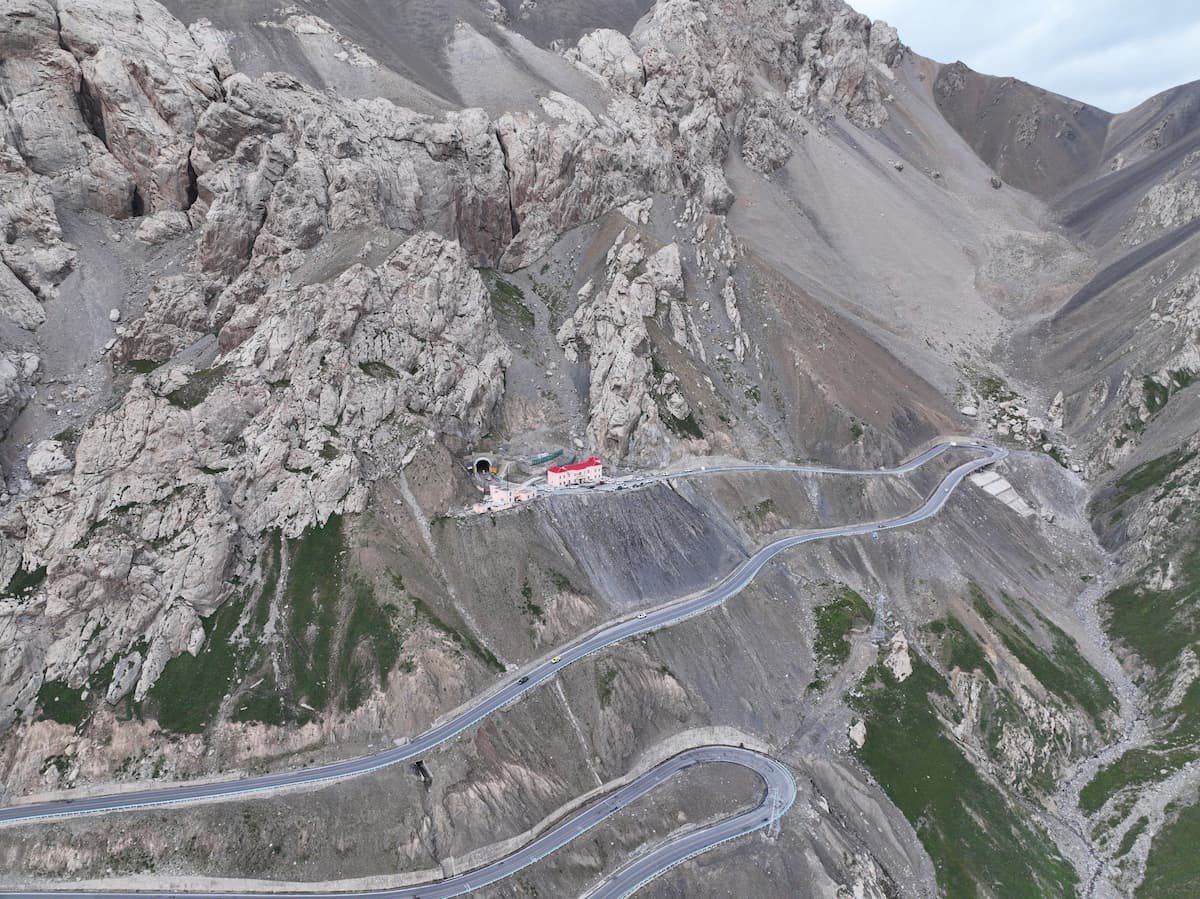
One practical note: in July and August, some sections of the Duku Highway get congested. It’s still worth doing, but don’t plan a tight schedule around it.
September: The Other Best Month
If I had to pick one month, this would be it. The heat of summer is gone. The autumn colors in northern Xinjiang — especially around Kanas Lake — start turning in late September. In the south, the weather is still warm during the day and cooler at night, which makes desert areas like Turpan manageable (in August, Turpan is uncomfortably hot).
September also avoids China’s two big holiday periods (Labor Day in May and National Day in October), so you get the weather without the worst of the crowds.
October: Autumn Colors in the South
The poplar forests (populus diversifolia) near Kashgar and Hotan turn gold in early to mid-October. If you’ve seen photos of Xinjiang with golden trees against a desert backdrop, this is when they were taken. The colors only last 2-3 weeks, and timing it right requires some luck.
National Day (October 1-7) falls in the middle of this window. If your dates are flexible, avoid traveling during this week — domestic tourism peaks again, and prices go up.
November-February: Winter, but Not Everywhere
Most tourist facilities in northern Xinjiang shut down or reduce hours from November to March. Kanas Lake is accessible but very cold (consistently below -10°C). The trade-off is that you’ll see it without any crowds, and the snow-covered landscapes are genuinely beautiful if you’re prepared for the temperature.
Southern Xinjiang stays milder. Kashgar in winter has daytime temperatures around 5-10°C — cold, but not extreme. The old city is quieter, hotels are cheap, and you don’t need to book ahead.
If you ski, the Altai region (where China’s ski industry is growing) has good powder and almost no foreigners on the slopes.
What to Pack, by Season
The Bottom Line
There isn’t a wrong time to visit Xinjiang, but there is a time that’s wrong for you. If you hate crowds and don’t mind planning ahead, summer is fine. If you want good weather and fewer people, May and September are better. If you’re on a budget, November to March in southern Xinjiang is the obvious choice.
The one thing I’d warn against: don’t try to cover the entire region in one trip, regardless of the season. Xinjiang is 1.6 million square kilometers — roughly the size of Iran, or one-sixth of China’s total area. Pick a region, pick a season that fits it, and plan accordingly.
Planning a trip and not sure which season fits your itinerary? Contact us — happy to help you narrow it down.
Northern vs. Southern Xinjiang: They Have Different Climates
This is the part most guides skip. Xinjiang is split by the Tianshan Mountains. The north (Urumqi, Ili, Kanas) gets more rain and has cooler summers. The south (Kashgar, Turpan, Hotan) is drier and warmer — sometimes much warmer. In July, Turpan regularly hits 40°C. In Kashgar, summer evenings are comfortable.
If you’re short on time and can only visit one region, here’s the rule of thumb:
Month by Month
March-April: Spring, but Not Everywhere
Daytime temperatures in Urumqi reach 10-15°C, but it can still snow. The south warms up faster — Kashgar in April is pleasant during the day, cold at night. This is when the apricot blossoms open in the Tarim Basin (southern Xinjiang), which is genuinely worth timing a trip around. The blossom season is short — about two weeks in late March to early April — and the exact timing shifts each year.
Crowds: very few tourists. Hotels and flights are cheap.
May: One of the Best Months
Spring is fully here. The grasslands in Ili are turning green. The weather is mild — 20-25°C during the day in most places. It doesn’t rain much. You can do a loop covering both north and south without dealing with summer heat or winter cold.
This is also when most domestic tour groups haven’t started their peak season yet, so attractions are quieter than in July and August.
June-August: Peak Season in the North
If you want to see Xinjiang’s postcard scenery — the green valleys of Nalati, the lavender fields in Huocheng, the blue water of Sayram Lake — this is the window. But it comes at a cost: July and August are when domestic tourism peaks. Hotels in popular spots (especially near Kanas and Sayram Lake) get booked out weeks in advance, and prices double.
If you’re traveling in summer, book accommodation at least a month ahead. And start your days early — the tour groups arrive by 10 a.m.
One practical note: in July and August, some sections of the Duku Highway get congested. It’s still worth doing, but don’t plan a tight schedule around it.
September: The Other Best Month
If I had to pick one month, this would be it. The heat of summer is gone. The autumn colors in northern Xinjiang — especially around Kanas Lake — start turning in late September. In the south, the weather is still warm during the day and cooler at night, which makes desert areas like Turpan manageable (in August, Turpan is uncomfortably hot).
September also avoids China’s two big holiday periods (Labor Day in May and National Day in October), so you get the weather without the worst of the crowds.
October: Autumn Colors in the South
The poplar forests (populus diversifolia) near Kashgar and Hotan turn gold in early to mid-October. If you’ve seen photos of Xinjiang with golden trees against a desert backdrop, this is when they were taken. The colors only last 2-3 weeks, and timing it right requires some luck.
National Day (October 1-7) falls in the middle of this window. If your dates are flexible, avoid traveling during this week — domestic tourism peaks again, and prices go up.
November-February: Winter, but Not Everywhere
Most tourist facilities in northern Xinjiang shut down or reduce hours from November to March. Kanas Lake is accessible but very cold (consistently below -10°C). The trade-off is that you’ll see it without any crowds, and the snow-covered landscapes are genuinely beautiful if you’re prepared for the temperature.
Southern Xinjiang stays milder. Kashgar in winter has daytime temperatures around 5-10°C — cold, but not extreme. The old city is quieter, hotels are cheap, and you don’t need to book ahead.
If you ski, the Altai region (where China’s ski industry is growing) has good powder and almost no foreigners on the slopes.
What to Pack, by Season
The Bottom Line
There isn’t a wrong time to visit Xinjiang, but there is a time that’s wrong for you. If you hate crowds and don’t mind planning ahead, summer is fine. If you want good weather and fewer people, May and September are better. If you’re on a budget, November to March in southern Xinjiang is the obvious choice.
The one thing I’d warn against: don’t try to cover the entire region in one trip, regardless of the season. Xinjiang is 1.6 million square kilometers — roughly the size of Iran, or one-sixth of China’s total area. Pick a region, pick a season that fits it, and plan accordingly.
Planning a trip and not sure which season fits your itinerary? Contact us — happy to help you narrow it down.
Most Xinjiang travel articles give you a one-line answer: “May to October is the best time.” That’s true, but it’s also incomplete. The right time to go depends on what you want to see — and Xinjiang is large enough that the north and the south can feel like two different countries.
I’ve broken this down by what actually matters: weather, scenery, crowds, and cost. If you’re trying to decide when to book, this should make it easier.
The Quick Answer
Northern vs. Southern Xinjiang: They Have Different Climates
This is the part most guides skip. Xinjiang is split by the Tianshan Mountains. The north (Urumqi, Ili, Kanas) gets more rain and has cooler summers. The south (Kashgar, Turpan, Hotan) is drier and warmer — sometimes much warmer. In July, Turpan regularly hits 40°C. In Kashgar, summer evenings are comfortable.
If you’re short on time and can only visit one region, here’s the rule of thumb:
Month by Month
March-April: Spring, but Not Everywhere
Daytime temperatures in Urumqi reach 10-15°C, but it can still snow. The south warms up faster — Kashgar in April is pleasant during the day, cold at night. This is when the apricot blossoms open in the Tarim Basin (southern Xinjiang), which is genuinely worth timing a trip around. The blossom season is short — about two weeks in late March to early April — and the exact timing shifts each year.
Crowds: very few tourists. Hotels and flights are cheap.
May: One of the Best Months
Spring is fully here. The grasslands in Ili are turning green. The weather is mild — 20-25°C during the day in most places. It doesn’t rain much. You can do a loop covering both north and south without dealing with summer heat or winter cold.
This is also when most domestic tour groups haven’t started their peak season yet, so attractions are quieter than in July and August.
June-August: Peak Season in the North
If you want to see Xinjiang’s postcard scenery — the green valleys of Nalati, the lavender fields in Huocheng, the blue water of Sayram Lake — this is the window. But it comes at a cost: July and August are when domestic tourism peaks. Hotels in popular spots (especially near Kanas and Sayram Lake) get booked out weeks in advance, and prices double.
If you’re traveling in summer, book accommodation at least a month ahead. And start your days early — the tour groups arrive by 10 a.m.
One practical note: in July and August, some sections of the Duku Highway get congested. It’s still worth doing, but don’t plan a tight schedule around it.
September: The Other Best Month
If I had to pick one month, this would be it. The heat of summer is gone. The autumn colors in northern Xinjiang — especially around Kanas Lake — start turning in late September. In the south, the weather is still warm during the day and cooler at night, which makes desert areas like Turpan manageable (in August, Turpan is uncomfortably hot).
September also avoids China’s two big holiday periods (Labor Day in May and National Day in October), so you get the weather without the worst of the crowds.
October: Autumn Colors in the South
The poplar forests (populus diversifolia) near Kashgar and Hotan turn gold in early to mid-October. If you’ve seen photos of Xinjiang with golden trees against a desert backdrop, this is when they were taken. The colors only last 2-3 weeks, and timing it right requires some luck.
National Day (October 1-7) falls in the middle of this window. If your dates are flexible, avoid traveling during this week — domestic tourism peaks again, and prices go up.
November-February: Winter, but Not Everywhere
Most tourist facilities in northern Xinjiang shut down or reduce hours from November to March. Kanas Lake is accessible but very cold (consistently below -10°C). The trade-off is that you’ll see it without any crowds, and the snow-covered landscapes are genuinely beautiful if you’re prepared for the temperature.
Southern Xinjiang stays milder. Kashgar in winter has daytime temperatures around 5-10°C — cold, but not extreme. The old city is quieter, hotels are cheap, and you don’t need to book ahead.
If you ski, the Altai region (where China’s ski industry is growing) has good powder and almost no foreigners on the slopes.
What to Pack, by Season
The Bottom Line
There isn’t a wrong time to visit Xinjiang, but there is a time that’s wrong for you. If you hate crowds and don’t mind planning ahead, summer is fine. If you want good weather and fewer people, May and September are better. If you’re on a budget, November to March in southern Xinjiang is the obvious choice.
The one thing I’d warn against: don’t try to cover the entire region in one trip, regardless of the season. Xinjiang is 1.6 million square kilometers — roughly the size of Iran, or one-sixth of China’s total area. Pick a region, pick a season that fits it, and plan accordingly.
Planning a trip and not sure which season fits your itinerary? Contact us — happy to help you narrow it down.
Northern vs. Southern Xinjiang: They Have Different Climates
This is the part most guides skip. Xinjiang is split by the Tianshan Mountains. The north (Urumqi, Ili, Kanas) gets more rain and has cooler summers. The south (Kashgar, Turpan, Hotan) is drier and warmer — sometimes much warmer. In July, Turpan regularly hits 40°C. In Kashgar, summer evenings are comfortable.
If you’re short on time and can only visit one region, here’s the rule of thumb:
Month by Month
March-April: Spring, but Not Everywhere
Daytime temperatures in Urumqi reach 10-15°C, but it can still snow. The south warms up faster — Kashgar in April is pleasant during the day, cold at night. This is when the apricot blossoms open in the Tarim Basin (southern Xinjiang), which is genuinely worth timing a trip around. The blossom season is short — about two weeks in late March to early April — and the exact timing shifts each year.
Crowds: very few tourists. Hotels and flights are cheap.
May: One of the Best Months
Spring is fully here. The grasslands in Ili are turning green. The weather is mild — 20-25°C during the day in most places. It doesn’t rain much. You can do a loop covering both north and south without dealing with summer heat or winter cold.
This is also when most domestic tour groups haven’t started their peak season yet, so attractions are quieter than in July and August.
June-August: Peak Season in the North
If you want to see Xinjiang’s postcard scenery — the green valleys of Nalati, the lavender fields in Huocheng, the blue water of Sayram Lake — this is the window. But it comes at a cost: July and August are when domestic tourism peaks. Hotels in popular spots (especially near Kanas and Sayram Lake) get booked out weeks in advance, and prices double.
If you’re traveling in summer, book accommodation at least a month ahead. And start your days early — the tour groups arrive by 10 a.m.
One practical note: in July and August, some sections of the Duku Highway get congested. It’s still worth doing, but don’t plan a tight schedule around it.
September: The Other Best Month
If I had to pick one month, this would be it. The heat of summer is gone. The autumn colors in northern Xinjiang — especially around Kanas Lake — start turning in late September. In the south, the weather is still warm during the day and cooler at night, which makes desert areas like Turpan manageable (in August, Turpan is uncomfortably hot).
September also avoids China’s two big holiday periods (Labor Day in May and National Day in October), so you get the weather without the worst of the crowds.
October: Autumn Colors in the South
The poplar forests (populus diversifolia) near Kashgar and Hotan turn gold in early to mid-October. If you’ve seen photos of Xinjiang with golden trees against a desert backdrop, this is when they were taken. The colors only last 2-3 weeks, and timing it right requires some luck.
National Day (October 1-7) falls in the middle of this window. If your dates are flexible, avoid traveling during this week — domestic tourism peaks again, and prices go up.
November-February: Winter, but Not Everywhere
Most tourist facilities in northern Xinjiang shut down or reduce hours from November to March. Kanas Lake is accessible but very cold (consistently below -10°C). The trade-off is that you’ll see it without any crowds, and the snow-covered landscapes are genuinely beautiful if you’re prepared for the temperature.
Southern Xinjiang stays milder. Kashgar in winter has daytime temperatures around 5-10°C — cold, but not extreme. The old city is quieter, hotels are cheap, and you don’t need to book ahead.
If you ski, the Altai region (where China’s ski industry is growing) has good powder and almost no foreigners on the slopes.
What to Pack, by Season
The Bottom Line
There isn’t a wrong time to visit Xinjiang, but there is a time that’s wrong for you. If you hate crowds and don’t mind planning ahead, summer is fine. If you want good weather and fewer people, May and September are better. If you’re on a budget, November to March in southern Xinjiang is the obvious choice.
The one thing I’d warn against: don’t try to cover the entire region in one trip, regardless of the season. Xinjiang is 1.6 million square kilometers — roughly the size of Iran, or one-sixth of China’s total area. Pick a region, pick a season that fits it, and plan accordingly.
Planning a trip and not sure which season fits your itinerary? Contact us — happy to help you narrow it down.
Most Xinjiang travel articles give you a one-line answer: “May to October is the best time.” That’s true, but it’s also incomplete. The right time to go depends on what you want to see — and Xinjiang is large enough that the north and the south can feel like two different countries.
I’ve broken this down by what actually matters: weather, scenery, crowds, and cost. If you’re trying to decide when to book, this should make it easier.
The Quick Answer
Northern vs. Southern Xinjiang: They Have Different Climates
This is the part most guides skip. Xinjiang is split by the Tianshan Mountains. The north (Urumqi, Ili, Kanas) gets more rain and has cooler summers. The south (Kashgar, Turpan, Hotan) is drier and warmer — sometimes much warmer. In July, Turpan regularly hits 40°C. In Kashgar, summer evenings are comfortable.
If you’re short on time and can only visit one region, here’s the rule of thumb:
Month by Month
March-April: Spring, but Not Everywhere
Daytime temperatures in Urumqi reach 10-15°C, but it can still snow. The south warms up faster — Kashgar in April is pleasant during the day, cold at night. This is when the apricot blossoms open in the Tarim Basin (southern Xinjiang), which is genuinely worth timing a trip around. The blossom season is short — about two weeks in late March to early April — and the exact timing shifts each year.
Crowds: very few tourists. Hotels and flights are cheap.
May: One of the Best Months
Spring is fully here. The grasslands in Ili are turning green. The weather is mild — 20-25°C during the day in most places. It doesn’t rain much. You can do a loop covering both north and south without dealing with summer heat or winter cold.
This is also when most domestic tour groups haven’t started their peak season yet, so attractions are quieter than in July and August.
June-August: Peak Season in the North
If you want to see Xinjiang’s postcard scenery — the green valleys of Nalati, the lavender fields in Huocheng, the blue water of Sayram Lake — this is the window. But it comes at a cost: July and August are when domestic tourism peaks. Hotels in popular spots (especially near Kanas and Sayram Lake) get booked out weeks in advance, and prices double.
If you’re traveling in summer, book accommodation at least a month ahead. And start your days early — the tour groups arrive by 10 a.m.
One practical note: in July and August, some sections of the Duku Highway get congested. It’s still worth doing, but don’t plan a tight schedule around it.
September: The Other Best Month
If I had to pick one month, this would be it. The heat of summer is gone. The autumn colors in northern Xinjiang — especially around Kanas Lake — start turning in late September. In the south, the weather is still warm during the day and cooler at night, which makes desert areas like Turpan manageable (in August, Turpan is uncomfortably hot).
September also avoids China’s two big holiday periods (Labor Day in May and National Day in October), so you get the weather without the worst of the crowds.
October: Autumn Colors in the South
The poplar forests (populus diversifolia) near Kashgar and Hotan turn gold in early to mid-October. If you’ve seen photos of Xinjiang with golden trees against a desert backdrop, this is when they were taken. The colors only last 2-3 weeks, and timing it right requires some luck.
National Day (October 1-7) falls in the middle of this window. If your dates are flexible, avoid traveling during this week — domestic tourism peaks again, and prices go up.
November-February: Winter, but Not Everywhere
Most tourist facilities in northern Xinjiang shut down or reduce hours from November to March. Kanas Lake is accessible but very cold (consistently below -10°C). The trade-off is that you’ll see it without any crowds, and the snow-covered landscapes are genuinely beautiful if you’re prepared for the temperature.
Southern Xinjiang stays milder. Kashgar in winter has daytime temperatures around 5-10°C — cold, but not extreme. The old city is quieter, hotels are cheap, and you don’t need to book ahead.
If you ski, the Altai region (where China’s ski industry is growing) has good powder and almost no foreigners on the slopes.
What to Pack, by Season
The Bottom Line
There isn’t a wrong time to visit Xinjiang, but there is a time that’s wrong for you. If you hate crowds and don’t mind planning ahead, summer is fine. If you want good weather and fewer people, May and September are better. If you’re on a budget, November to March in southern Xinjiang is the obvious choice.
The one thing I’d warn against: don’t try to cover the entire region in one trip, regardless of the season. Xinjiang is 1.6 million square kilometers — roughly the size of Iran, or one-sixth of China’s total area. Pick a region, pick a season that fits it, and plan accordingly.
Planning a trip and not sure which season fits your itinerary? Contact us — happy to help you narrow it down.
Most Xinjiang travel articles give you a one-line answer: “May to October is the best time.” That’s true, but it’s also incomplete. The right time to go depends on what you want to see — and Xinjiang is large enough that the north and the south can feel like two different countries.
I’ve broken this down by what actually matters: weather, scenery, crowds, and cost. If you’re trying to decide when to book, this should make it easier.
The Quick Answer
Northern vs. Southern Xinjiang: They Have Different Climates
This is the part most guides skip. Xinjiang is split by the Tianshan Mountains. The north (Urumqi, Ili, Kanas) gets more rain and has cooler summers. The south (Kashgar, Turpan, Hotan) is drier and warmer — sometimes much warmer. In July, Turpan regularly hits 40°C. In Kashgar, summer evenings are comfortable.
If you’re short on time and can only visit one region, here’s the rule of thumb:
Month by Month
March-April: Spring, but Not Everywhere
Daytime temperatures in Urumqi reach 10-15°C, but it can still snow. The south warms up faster — Kashgar in April is pleasant during the day, cold at night. This is when the apricot blossoms open in the Tarim Basin (southern Xinjiang), which is genuinely worth timing a trip around. The blossom season is short — about two weeks in late March to early April — and the exact timing shifts each year.
Crowds: very few tourists. Hotels and flights are cheap.
May: One of the Best Months
Spring is fully here. The grasslands in Ili are turning green. The weather is mild — 20-25°C during the day in most places. It doesn’t rain much. You can do a loop covering both north and south without dealing with summer heat or winter cold.
This is also when most domestic tour groups haven’t started their peak season yet, so attractions are quieter than in July and August.
June-August: Peak Season in the North
If you want to see Xinjiang’s postcard scenery — the green valleys of Nalati, the lavender fields in Huocheng, the blue water of Sayram Lake — this is the window. But it comes at a cost: July and August are when domestic tourism peaks. Hotels in popular spots (especially near Kanas and Sayram Lake) get booked out weeks in advance, and prices double.
If you’re traveling in summer, book accommodation at least a month ahead. And start your days early — the tour groups arrive by 10 a.m.
One practical note: in July and August, some sections of the Duku Highway get congested. It’s still worth doing, but don’t plan a tight schedule around it.
September: The Other Best Month
If I had to pick one month, this would be it. The heat of summer is gone. The autumn colors in northern Xinjiang — especially around Kanas Lake — start turning in late September. In the south, the weather is still warm during the day and cooler at night, which makes desert areas like Turpan manageable (in August, Turpan is uncomfortably hot).
September also avoids China’s two big holiday periods (Labor Day in May and National Day in October), so you get the weather without the worst of the crowds.
October: Autumn Colors in the South
The poplar forests (populus diversifolia) near Kashgar and Hotan turn gold in early to mid-October. If you’ve seen photos of Xinjiang with golden trees against a desert backdrop, this is when they were taken. The colors only last 2-3 weeks, and timing it right requires some luck.
National Day (October 1-7) falls in the middle of this window. If your dates are flexible, avoid traveling during this week — domestic tourism peaks again, and prices go up.
November-February: Winter, but Not Everywhere
Most tourist facilities in northern Xinjiang shut down or reduce hours from November to March. Kanas Lake is accessible but very cold (consistently below -10°C). The trade-off is that you’ll see it without any crowds, and the snow-covered landscapes are genuinely beautiful if you’re prepared for the temperature.
Southern Xinjiang stays milder. Kashgar in winter has daytime temperatures around 5-10°C — cold, but not extreme. The old city is quieter, hotels are cheap, and you don’t need to book ahead.
If you ski, the Altai region (where China’s ski industry is growing) has good powder and almost no foreigners on the slopes.
What to Pack, by Season
The Bottom Line
There isn’t a wrong time to visit Xinjiang, but there is a time that’s wrong for you. If you hate crowds and don’t mind planning ahead, summer is fine. If you want good weather and fewer people, May and September are better. If you’re on a budget, November to March in southern Xinjiang is the obvious choice.
The one thing I’d warn against: don’t try to cover the entire region in one trip, regardless of the season. Xinjiang is 1.6 million square kilometers — roughly the size of Iran, or one-sixth of China’s total area. Pick a region, pick a season that fits it, and plan accordingly.
Planning a trip and not sure which season fits your itinerary? Contact us — happy to help you narrow it down.
Northern vs. Southern Xinjiang: They Have Different Climates
This is the part most guides skip. Xinjiang is split by the Tianshan Mountains. The north (Urumqi, Ili, Kanas) gets more rain and has cooler summers. The south (Kashgar, Turpan, Hotan) is drier and warmer — sometimes much warmer. In July, Turpan regularly hits 40°C. In Kashgar, summer evenings are comfortable.
If you’re short on time and can only visit one region, here’s the rule of thumb:
Month by Month
March-April: Spring, but Not Everywhere
Daytime temperatures in Urumqi reach 10-15°C, but it can still snow. The south warms up faster — Kashgar in April is pleasant during the day, cold at night. This is when the apricot blossoms open in the Tarim Basin (southern Xinjiang), which is genuinely worth timing a trip around. The blossom season is short — about two weeks in late March to early April — and the exact timing shifts each year.
Crowds: very few tourists. Hotels and flights are cheap.
May: One of the Best Months
Spring is fully here. The grasslands in Ili are turning green. The weather is mild — 20-25°C during the day in most places. It doesn’t rain much. You can do a loop covering both north and south without dealing with summer heat or winter cold.
This is also when most domestic tour groups haven’t started their peak season yet, so attractions are quieter than in July and August.
June-August: Peak Season in the North
If you want to see Xinjiang’s postcard scenery — the green valleys of Nalati, the lavender fields in Huocheng, the blue water of Sayram Lake — this is the window. But it comes at a cost: July and August are when domestic tourism peaks. Hotels in popular spots (especially near Kanas and Sayram Lake) get booked out weeks in advance, and prices double.
If you’re traveling in summer, book accommodation at least a month ahead. And start your days early — the tour groups arrive by 10 a.m.
One practical note: in July and August, some sections of the Duku Highway get congested. It’s still worth doing, but don’t plan a tight schedule around it.
September: The Other Best Month
If I had to pick one month, this would be it. The heat of summer is gone. The autumn colors in northern Xinjiang — especially around Kanas Lake — start turning in late September. In the south, the weather is still warm during the day and cooler at night, which makes desert areas like Turpan manageable (in August, Turpan is uncomfortably hot).
September also avoids China’s two big holiday periods (Labor Day in May and National Day in October), so you get the weather without the worst of the crowds.
October: Autumn Colors in the South
The poplar forests (populus diversifolia) near Kashgar and Hotan turn gold in early to mid-October. If you’ve seen photos of Xinjiang with golden trees against a desert backdrop, this is when they were taken. The colors only last 2-3 weeks, and timing it right requires some luck.
National Day (October 1-7) falls in the middle of this window. If your dates are flexible, avoid traveling during this week — domestic tourism peaks again, and prices go up.
November-February: Winter, but Not Everywhere
Most tourist facilities in northern Xinjiang shut down or reduce hours from November to March. Kanas Lake is accessible but very cold (consistently below -10°C). The trade-off is that you’ll see it without any crowds, and the snow-covered landscapes are genuinely beautiful if you’re prepared for the temperature.
Southern Xinjiang stays milder. Kashgar in winter has daytime temperatures around 5-10°C — cold, but not extreme. The old city is quieter, hotels are cheap, and you don’t need to book ahead.
If you ski, the Altai region (where China’s ski industry is growing) has good powder and almost no foreigners on the slopes.
What to Pack, by Season
The Bottom Line
There isn’t a wrong time to visit Xinjiang, but there is a time that’s wrong for you. If you hate crowds and don’t mind planning ahead, summer is fine. If you want good weather and fewer people, May and September are better. If you’re on a budget, November to March in southern Xinjiang is the obvious choice.
The one thing I’d warn against: don’t try to cover the entire region in one trip, regardless of the season. Xinjiang is 1.6 million square kilometers — roughly the size of Iran, or one-sixth of China’s total area. Pick a region, pick a season that fits it, and plan accordingly.
Planning a trip and not sure which season fits your itinerary? Contact us — happy to help you narrow it down.
Most Xinjiang travel articles give you a one-line answer: “May to October is the best time.” That’s true, but it’s also incomplete. The right time to go depends on what you want to see — and Xinjiang is large enough that the north and the south can feel like two different countries.
I’ve broken this down by what actually matters: weather, scenery, crowds, and cost. If you’re trying to decide when to book, this should make it easier.
The Quick Answer
Northern vs. Southern Xinjiang: They Have Different Climates
This is the part most guides skip. Xinjiang is split by the Tianshan Mountains. The north (Urumqi, Ili, Kanas) gets more rain and has cooler summers. The south (Kashgar, Turpan, Hotan) is drier and warmer — sometimes much warmer. In July, Turpan regularly hits 40°C. In Kashgar, summer evenings are comfortable.
If you’re short on time and can only visit one region, here’s the rule of thumb:
Month by Month
March-April: Spring, but Not Everywhere
Daytime temperatures in Urumqi reach 10-15°C, but it can still snow. The south warms up faster — Kashgar in April is pleasant during the day, cold at night. This is when the apricot blossoms open in the Tarim Basin (southern Xinjiang), which is genuinely worth timing a trip around. The blossom season is short — about two weeks in late March to early April — and the exact timing shifts each year.
Crowds: very few tourists. Hotels and flights are cheap.
May: One of the Best Months
Spring is fully here. The grasslands in Ili are turning green. The weather is mild — 20-25°C during the day in most places. It doesn’t rain much. You can do a loop covering both north and south without dealing with summer heat or winter cold.
This is also when most domestic tour groups haven’t started their peak season yet, so attractions are quieter than in July and August.
June-August: Peak Season in the North
If you want to see Xinjiang’s postcard scenery — the green valleys of Nalati, the lavender fields in Huocheng, the blue water of Sayram Lake — this is the window. But it comes at a cost: July and August are when domestic tourism peaks. Hotels in popular spots (especially near Kanas and Sayram Lake) get booked out weeks in advance, and prices double.
If you’re traveling in summer, book accommodation at least a month ahead. And start your days early — the tour groups arrive by 10 a.m.
One practical note: in July and August, some sections of the Duku Highway get congested. It’s still worth doing, but don’t plan a tight schedule around it.
September: The Other Best Month
If I had to pick one month, this would be it. The heat of summer is gone. The autumn colors in northern Xinjiang — especially around Kanas Lake — start turning in late September. In the south, the weather is still warm during the day and cooler at night, which makes desert areas like Turpan manageable (in August, Turpan is uncomfortably hot).
September also avoids China’s two big holiday periods (Labor Day in May and National Day in October), so you get the weather without the worst of the crowds.
October: Autumn Colors in the South
The poplar forests (populus diversifolia) near Kashgar and Hotan turn gold in early to mid-October. If you’ve seen photos of Xinjiang with golden trees against a desert backdrop, this is when they were taken. The colors only last 2-3 weeks, and timing it right requires some luck.
National Day (October 1-7) falls in the middle of this window. If your dates are flexible, avoid traveling during this week — domestic tourism peaks again, and prices go up.
November-February: Winter, but Not Everywhere
Most tourist facilities in northern Xinjiang shut down or reduce hours from November to March. Kanas Lake is accessible but very cold (consistently below -10°C). The trade-off is that you’ll see it without any crowds, and the snow-covered landscapes are genuinely beautiful if you’re prepared for the temperature.
Southern Xinjiang stays milder. Kashgar in winter has daytime temperatures around 5-10°C — cold, but not extreme. The old city is quieter, hotels are cheap, and you don’t need to book ahead.
If you ski, the Altai region (where China’s ski industry is growing) has good powder and almost no foreigners on the slopes.
What to Pack, by Season
The Bottom Line
There isn’t a wrong time to visit Xinjiang, but there is a time that’s wrong for you. If you hate crowds and don’t mind planning ahead, summer is fine. If you want good weather and fewer people, May and September are better. If you’re on a budget, November to March in southern Xinjiang is the obvious choice.
The one thing I’d warn against: don’t try to cover the entire region in one trip, regardless of the season. Xinjiang is 1.6 million square kilometers — roughly the size of Iran, or one-sixth of China’s total area. Pick a region, pick a season that fits it, and plan accordingly.
Planning a trip and not sure which season fits your itinerary? Contact us — happy to help you narrow it down.
Northern vs. Southern Xinjiang: They Have Different Climates
This is the part most guides skip. Xinjiang is split by the Tianshan Mountains. The north (Urumqi, Ili, Kanas) gets more rain and has cooler summers. The south (Kashgar, Turpan, Hotan) is drier and warmer — sometimes much warmer. In July, Turpan regularly hits 40°C. In Kashgar, summer evenings are comfortable.
If you’re short on time and can only visit one region, here’s the rule of thumb:
Month by Month
March-April: Spring, but Not Everywhere
Daytime temperatures in Urumqi reach 10-15°C, but it can still snow. The south warms up faster — Kashgar in April is pleasant during the day, cold at night. This is when the apricot blossoms open in the Tarim Basin (southern Xinjiang), which is genuinely worth timing a trip around. The blossom season is short — about two weeks in late March to early April — and the exact timing shifts each year.
Crowds: very few tourists. Hotels and flights are cheap.
May: One of the Best Months
Spring is fully here. The grasslands in Ili are turning green. The weather is mild — 20-25°C during the day in most places. It doesn’t rain much. You can do a loop covering both north and south without dealing with summer heat or winter cold.
This is also when most domestic tour groups haven’t started their peak season yet, so attractions are quieter than in July and August.
June-August: Peak Season in the North
If you want to see Xinjiang’s postcard scenery — the green valleys of Nalati, the lavender fields in Huocheng, the blue water of Sayram Lake — this is the window. But it comes at a cost: July and August are when domestic tourism peaks. Hotels in popular spots (especially near Kanas and Sayram Lake) get booked out weeks in advance, and prices double.
If you’re traveling in summer, book accommodation at least a month ahead. And start your days early — the tour groups arrive by 10 a.m.
One practical note: in July and August, some sections of the Duku Highway get congested. It’s still worth doing, but don’t plan a tight schedule around it.
September: The Other Best Month
If I had to pick one month, this would be it. The heat of summer is gone. The autumn colors in northern Xinjiang — especially around Kanas Lake — start turning in late September. In the south, the weather is still warm during the day and cooler at night, which makes desert areas like Turpan manageable (in August, Turpan is uncomfortably hot).
September also avoids China’s two big holiday periods (Labor Day in May and National Day in October), so you get the weather without the worst of the crowds.
October: Autumn Colors in the South
The poplar forests (populus diversifolia) near Kashgar and Hotan turn gold in early to mid-October. If you’ve seen photos of Xinjiang with golden trees against a desert backdrop, this is when they were taken. The colors only last 2-3 weeks, and timing it right requires some luck.
National Day (October 1-7) falls in the middle of this window. If your dates are flexible, avoid traveling during this week — domestic tourism peaks again, and prices go up.
November-February: Winter, but Not Everywhere
Most tourist facilities in northern Xinjiang shut down or reduce hours from November to March. Kanas Lake is accessible but very cold (consistently below -10°C). The trade-off is that you’ll see it without any crowds, and the snow-covered landscapes are genuinely beautiful if you’re prepared for the temperature.
Southern Xinjiang stays milder. Kashgar in winter has daytime temperatures around 5-10°C — cold, but not extreme. The old city is quieter, hotels are cheap, and you don’t need to book ahead.
If you ski, the Altai region (where China’s ski industry is growing) has good powder and almost no foreigners on the slopes.
What to Pack, by Season
The Bottom Line
There isn’t a wrong time to visit Xinjiang, but there is a time that’s wrong for you. If you hate crowds and don’t mind planning ahead, summer is fine. If you want good weather and fewer people, May and September are better. If you’re on a budget, November to March in southern Xinjiang is the obvious choice.
The one thing I’d warn against: don’t try to cover the entire region in one trip, regardless of the season. Xinjiang is 1.6 million square kilometers — roughly the size of Iran, or one-sixth of China’s total area. Pick a region, pick a season that fits it, and plan accordingly.
Planning a trip and not sure which season fits your itinerary? Contact us — happy to help you narrow it down.
Most Xinjiang travel articles give you a one-line answer: “May to October is the best time.” That’s true, but it’s also incomplete. The right time to go depends on what you want to see — and Xinjiang is large enough that the north and the south can feel like two different countries.
I’ve broken this down by what actually matters: weather, scenery, crowds, and cost. If you’re trying to decide when to book, this should make it easier.
The Quick Answer
Northern vs. Southern Xinjiang: They Have Different Climates
This is the part most guides skip. Xinjiang is split by the Tianshan Mountains. The north (Urumqi, Ili, Kanas) gets more rain and has cooler summers. The south (Kashgar, Turpan, Hotan) is drier and warmer — sometimes much warmer. In July, Turpan regularly hits 40°C. In Kashgar, summer evenings are comfortable.
If you’re short on time and can only visit one region, here’s the rule of thumb:
Month by Month
March-April: Spring, but Not Everywhere
Daytime temperatures in Urumqi reach 10-15°C, but it can still snow. The south warms up faster — Kashgar in April is pleasant during the day, cold at night. This is when the apricot blossoms open in the Tarim Basin (southern Xinjiang), which is genuinely worth timing a trip around. The blossom season is short — about two weeks in late March to early April — and the exact timing shifts each year.
Crowds: very few tourists. Hotels and flights are cheap.
May: One of the Best Months
Spring is fully here. The grasslands in Ili are turning green. The weather is mild — 20-25°C during the day in most places. It doesn’t rain much. You can do a loop covering both north and south without dealing with summer heat or winter cold.
This is also when most domestic tour groups haven’t started their peak season yet, so attractions are quieter than in July and August.
June-August: Peak Season in the North
If you want to see Xinjiang’s postcard scenery — the green valleys of Nalati, the lavender fields in Huocheng, the blue water of Sayram Lake — this is the window. But it comes at a cost: July and August are when domestic tourism peaks. Hotels in popular spots (especially near Kanas and Sayram Lake) get booked out weeks in advance, and prices double.
If you’re traveling in summer, book accommodation at least a month ahead. And start your days early — the tour groups arrive by 10 a.m.
One practical note: in July and August, some sections of the Duku Highway get congested. It’s still worth doing, but don’t plan a tight schedule around it.
September: The Other Best Month
If I had to pick one month, this would be it. The heat of summer is gone. The autumn colors in northern Xinjiang — especially around Kanas Lake — start turning in late September. In the south, the weather is still warm during the day and cooler at night, which makes desert areas like Turpan manageable (in August, Turpan is uncomfortably hot).
September also avoids China’s two big holiday periods (Labor Day in May and National Day in October), so you get the weather without the worst of the crowds.
October: Autumn Colors in the South
The poplar forests (populus diversifolia) near Kashgar and Hotan turn gold in early to mid-October. If you’ve seen photos of Xinjiang with golden trees against a desert backdrop, this is when they were taken. The colors only last 2-3 weeks, and timing it right requires some luck.
National Day (October 1-7) falls in the middle of this window. If your dates are flexible, avoid traveling during this week — domestic tourism peaks again, and prices go up.
November-February: Winter, but Not Everywhere
Most tourist facilities in northern Xinjiang shut down or reduce hours from November to March. Kanas Lake is accessible but very cold (consistently below -10°C). The trade-off is that you’ll see it without any crowds, and the snow-covered landscapes are genuinely beautiful if you’re prepared for the temperature.
Southern Xinjiang stays milder. Kashgar in winter has daytime temperatures around 5-10°C — cold, but not extreme. The old city is quieter, hotels are cheap, and you don’t need to book ahead.
If you ski, the Altai region (where China’s ski industry is growing) has good powder and almost no foreigners on the slopes.
What to Pack, by Season
The Bottom Line
There isn’t a wrong time to visit Xinjiang, but there is a time that’s wrong for you. If you hate crowds and don’t mind planning ahead, summer is fine. If you want good weather and fewer people, May and September are better. If you’re on a budget, November to March in southern Xinjiang is the obvious choice.
The one thing I’d warn against: don’t try to cover the entire region in one trip, regardless of the season. Xinjiang is 1.6 million square kilometers — roughly the size of Iran, or one-sixth of China’s total area. Pick a region, pick a season that fits it, and plan accordingly.
Planning a trip and not sure which season fits your itinerary? Contact us — happy to help you narrow it down.
Most Xinjiang travel articles give you a one-line answer: “May to October is the best time.” That’s true, but it’s also incomplete. The right time to go depends on what you want to see — and Xinjiang is large enough that the north and the south can feel like two different countries.
I’ve broken this down by what actually matters: weather, scenery, crowds, and cost. If you’re trying to decide when to book, this should make it easier.
The Quick Answer
Northern vs. Southern Xinjiang: They Have Different Climates
This is the part most guides skip. Xinjiang is split by the Tianshan Mountains. The north (Urumqi, Ili, Kanas) gets more rain and has cooler summers. The south (Kashgar, Turpan, Hotan) is drier and warmer — sometimes much warmer. In July, Turpan regularly hits 40°C. In Kashgar, summer evenings are comfortable.
If you’re short on time and can only visit one region, here’s the rule of thumb:
Month by Month
March-April: Spring, but Not Everywhere
Daytime temperatures in Urumqi reach 10-15°C, but it can still snow. The south warms up faster — Kashgar in April is pleasant during the day, cold at night. This is when the apricot blossoms open in the Tarim Basin (southern Xinjiang), which is genuinely worth timing a trip around. The blossom season is short — about two weeks in late March to early April — and the exact timing shifts each year.
Crowds: very few tourists. Hotels and flights are cheap.
May: One of the Best Months
Spring is fully here. The grasslands in Ili are turning green. The weather is mild — 20-25°C during the day in most places. It doesn’t rain much. You can do a loop covering both north and south without dealing with summer heat or winter cold.
This is also when most domestic tour groups haven’t started their peak season yet, so attractions are quieter than in July and August.
June-August: Peak Season in the North
If you want to see Xinjiang’s postcard scenery — the green valleys of Nalati, the lavender fields in Huocheng, the blue water of Sayram Lake — this is the window. But it comes at a cost: July and August are when domestic tourism peaks. Hotels in popular spots (especially near Kanas and Sayram Lake) get booked out weeks in advance, and prices double.
If you’re traveling in summer, book accommodation at least a month ahead. And start your days early — the tour groups arrive by 10 a.m.
One practical note: in July and August, some sections of the Duku Highway get congested. It’s still worth doing, but don’t plan a tight schedule around it.
September: The Other Best Month
If I had to pick one month, this would be it. The heat of summer is gone. The autumn colors in northern Xinjiang — especially around Kanas Lake — start turning in late September. In the south, the weather is still warm during the day and cooler at night, which makes desert areas like Turpan manageable (in August, Turpan is uncomfortably hot).
September also avoids China’s two big holiday periods (Labor Day in May and National Day in October), so you get the weather without the worst of the crowds.
October: Autumn Colors in the South
The poplar forests (populus diversifolia) near Kashgar and Hotan turn gold in early to mid-October. If you’ve seen photos of Xinjiang with golden trees against a desert backdrop, this is when they were taken. The colors only last 2-3 weeks, and timing it right requires some luck.
National Day (October 1-7) falls in the middle of this window. If your dates are flexible, avoid traveling during this week — domestic tourism peaks again, and prices go up.
November-February: Winter, but Not Everywhere
Most tourist facilities in northern Xinjiang shut down or reduce hours from November to March. Kanas Lake is accessible but very cold (consistently below -10°C). The trade-off is that you’ll see it without any crowds, and the snow-covered landscapes are genuinely beautiful if you’re prepared for the temperature.
Southern Xinjiang stays milder. Kashgar in winter has daytime temperatures around 5-10°C — cold, but not extreme. The old city is quieter, hotels are cheap, and you don’t need to book ahead.
If you ski, the Altai region (where China’s ski industry is growing) has good powder and almost no foreigners on the slopes.
What to Pack, by Season
The Bottom Line
There isn’t a wrong time to visit Xinjiang, but there is a time that’s wrong for you. If you hate crowds and don’t mind planning ahead, summer is fine. If you want good weather and fewer people, May and September are better. If you’re on a budget, November to March in southern Xinjiang is the obvious choice.
The one thing I’d warn against: don’t try to cover the entire region in one trip, regardless of the season. Xinjiang is 1.6 million square kilometers — roughly the size of Iran, or one-sixth of China’s total area. Pick a region, pick a season that fits it, and plan accordingly.
Planning a trip and not sure which season fits your itinerary? Contact us — happy to help you narrow it down.
Northern vs. Southern Xinjiang: They Have Different Climates
This is the part most guides skip. Xinjiang is split by the Tianshan Mountains. The north (Urumqi, Ili, Kanas) gets more rain and has cooler summers. The south (Kashgar, Turpan, Hotan) is drier and warmer — sometimes much warmer. In July, Turpan regularly hits 40°C. In Kashgar, summer evenings are comfortable.
If you’re short on time and can only visit one region, here’s the rule of thumb:
Month by Month
March-April: Spring, but Not Everywhere
Daytime temperatures in Urumqi reach 10-15°C, but it can still snow. The south warms up faster — Kashgar in April is pleasant during the day, cold at night. This is when the apricot blossoms open in the Tarim Basin (southern Xinjiang), which is genuinely worth timing a trip around. The blossom season is short — about two weeks in late March to early April — and the exact timing shifts each year.
Crowds: very few tourists. Hotels and flights are cheap.
May: One of the Best Months
Spring is fully here. The grasslands in Ili are turning green. The weather is mild — 20-25°C during the day in most places. It doesn’t rain much. You can do a loop covering both north and south without dealing with summer heat or winter cold.
This is also when most domestic tour groups haven’t started their peak season yet, so attractions are quieter than in July and August.
June-August: Peak Season in the North
If you want to see Xinjiang’s postcard scenery — the green valleys of Nalati, the lavender fields in Huocheng, the blue water of Sayram Lake — this is the window. But it comes at a cost: July and August are when domestic tourism peaks. Hotels in popular spots (especially near Kanas and Sayram Lake) get booked out weeks in advance, and prices double.
If you’re traveling in summer, book accommodation at least a month ahead. And start your days early — the tour groups arrive by 10 a.m.
One practical note: in July and August, some sections of the Duku Highway get congested. It’s still worth doing, but don’t plan a tight schedule around it.
September: The Other Best Month
If I had to pick one month, this would be it. The heat of summer is gone. The autumn colors in northern Xinjiang — especially around Kanas Lake — start turning in late September. In the south, the weather is still warm during the day and cooler at night, which makes desert areas like Turpan manageable (in August, Turpan is uncomfortably hot).
September also avoids China’s two big holiday periods (Labor Day in May and National Day in October), so you get the weather without the worst of the crowds.
October: Autumn Colors in the South
The poplar forests (populus diversifolia) near Kashgar and Hotan turn gold in early to mid-October. If you’ve seen photos of Xinjiang with golden trees against a desert backdrop, this is when they were taken. The colors only last 2-3 weeks, and timing it right requires some luck.
National Day (October 1-7) falls in the middle of this window. If your dates are flexible, avoid traveling during this week — domestic tourism peaks again, and prices go up.
November-February: Winter, but Not Everywhere
Most tourist facilities in northern Xinjiang shut down or reduce hours from November to March. Kanas Lake is accessible but very cold (consistently below -10°C). The trade-off is that you’ll see it without any crowds, and the snow-covered landscapes are genuinely beautiful if you’re prepared for the temperature.
Southern Xinjiang stays milder. Kashgar in winter has daytime temperatures around 5-10°C — cold, but not extreme. The old city is quieter, hotels are cheap, and you don’t need to book ahead.
If you ski, the Altai region (where China’s ski industry is growing) has good powder and almost no foreigners on the slopes.
What to Pack, by Season
The Bottom Line
There isn’t a wrong time to visit Xinjiang, but there is a time that’s wrong for you. If you hate crowds and don’t mind planning ahead, summer is fine. If you want good weather and fewer people, May and September are better. If you’re on a budget, November to March in southern Xinjiang is the obvious choice.
The one thing I’d warn against: don’t try to cover the entire region in one trip, regardless of the season. Xinjiang is 1.6 million square kilometers — roughly the size of Iran, or one-sixth of China’s total area. Pick a region, pick a season that fits it, and plan accordingly.
Planning a trip and not sure which season fits your itinerary? Contact us — happy to help you narrow it down.
Most Xinjiang travel articles give you a one-line answer: “May to October is the best time.” That’s true, but it’s also incomplete. The right time to go depends on what you want to see — and Xinjiang is large enough that the north and the south can feel like two different countries.
I’ve broken this down by what actually matters: weather, scenery, crowds, and cost. If you’re trying to decide when to book, this should make it easier.
The Quick Answer
Northern vs. Southern Xinjiang: They Have Different Climates
This is the part most guides skip. Xinjiang is split by the Tianshan Mountains. The north (Urumqi, Ili, Kanas) gets more rain and has cooler summers. The south (Kashgar, Turpan, Hotan) is drier and warmer — sometimes much warmer. In July, Turpan regularly hits 40°C. In Kashgar, summer evenings are comfortable.
If you’re short on time and can only visit one region, here’s the rule of thumb:
Month by Month
March-April: Spring, but Not Everywhere
Daytime temperatures in Urumqi reach 10-15°C, but it can still snow. The south warms up faster — Kashgar in April is pleasant during the day, cold at night. This is when the apricot blossoms open in the Tarim Basin (southern Xinjiang), which is genuinely worth timing a trip around. The blossom season is short — about two weeks in late March to early April — and the exact timing shifts each year.
Crowds: very few tourists. Hotels and flights are cheap.
May: One of the Best Months
Spring is fully here. The grasslands in Ili are turning green. The weather is mild — 20-25°C during the day in most places. It doesn’t rain much. You can do a loop covering both north and south without dealing with summer heat or winter cold.
This is also when most domestic tour groups haven’t started their peak season yet, so attractions are quieter than in July and August.
June-August: Peak Season in the North
If you want to see Xinjiang’s postcard scenery — the green valleys of Nalati, the lavender fields in Huocheng, the blue water of Sayram Lake — this is the window. But it comes at a cost: July and August are when domestic tourism peaks. Hotels in popular spots (especially near Kanas and Sayram Lake) get booked out weeks in advance, and prices double.
If you’re traveling in summer, book accommodation at least a month ahead. And start your days early — the tour groups arrive by 10 a.m.
One practical note: in July and August, some sections of the Duku Highway get congested. It’s still worth doing, but don’t plan a tight schedule around it.
September: The Other Best Month
If I had to pick one month, this would be it. The heat of summer is gone. The autumn colors in northern Xinjiang — especially around Kanas Lake — start turning in late September. In the south, the weather is still warm during the day and cooler at night, which makes desert areas like Turpan manageable (in August, Turpan is uncomfortably hot).
September also avoids China’s two big holiday periods (Labor Day in May and National Day in October), so you get the weather without the worst of the crowds.
October: Autumn Colors in the South
The poplar forests (populus diversifolia) near Kashgar and Hotan turn gold in early to mid-October. If you’ve seen photos of Xinjiang with golden trees against a desert backdrop, this is when they were taken. The colors only last 2-3 weeks, and timing it right requires some luck.
National Day (October 1-7) falls in the middle of this window. If your dates are flexible, avoid traveling during this week — domestic tourism peaks again, and prices go up.
November-February: Winter, but Not Everywhere
Most tourist facilities in northern Xinjiang shut down or reduce hours from November to March. Kanas Lake is accessible but very cold (consistently below -10°C). The trade-off is that you’ll see it without any crowds, and the snow-covered landscapes are genuinely beautiful if you’re prepared for the temperature.
Southern Xinjiang stays milder. Kashgar in winter has daytime temperatures around 5-10°C — cold, but not extreme. The old city is quieter, hotels are cheap, and you don’t need to book ahead.
If you ski, the Altai region (where China’s ski industry is growing) has good powder and almost no foreigners on the slopes.
What to Pack, by Season
The Bottom Line
There isn’t a wrong time to visit Xinjiang, but there is a time that’s wrong for you. If you hate crowds and don’t mind planning ahead, summer is fine. If you want good weather and fewer people, May and September are better. If you’re on a budget, November to March in southern Xinjiang is the obvious choice.
The one thing I’d warn against: don’t try to cover the entire region in one trip, regardless of the season. Xinjiang is 1.6 million square kilometers — roughly the size of Iran, or one-sixth of China’s total area. Pick a region, pick a season that fits it, and plan accordingly.
Planning a trip and not sure which season fits your itinerary? Contact us — happy to help you narrow it down.
Most Xinjiang travel articles give you a one-line answer: “May to October is the best time.” That’s true, but it’s also incomplete. The right time to go depends on what you want to see — and Xinjiang is large enough that the north and the south can feel like two different countries.
I’ve broken this down by what actually matters: weather, scenery, crowds, and cost. If you’re trying to decide when to book, this should make it easier.
The Quick Answer
Northern vs. Southern Xinjiang: They Have Different Climates
This is the part most guides skip. Xinjiang is split by the Tianshan Mountains. The north (Urumqi, Ili, Kanas) gets more rain and has cooler summers. The south (Kashgar, Turpan, Hotan) is drier and warmer — sometimes much warmer. In July, Turpan regularly hits 40°C. In Kashgar, summer evenings are comfortable.
If you’re short on time and can only visit one region, here’s the rule of thumb:
Month by Month
March-April: Spring, but Not Everywhere
Daytime temperatures in Urumqi reach 10-15°C, but it can still snow. The south warms up faster — Kashgar in April is pleasant during the day, cold at night. This is when the apricot blossoms open in the Tarim Basin (southern Xinjiang), which is genuinely worth timing a trip around. The blossom season is short — about two weeks in late March to early April — and the exact timing shifts each year.
Crowds: very few tourists. Hotels and flights are cheap.
May: One of the Best Months
Spring is fully here. The grasslands in Ili are turning green. The weather is mild — 20-25°C during the day in most places. It doesn’t rain much. You can do a loop covering both north and south without dealing with summer heat or winter cold.
This is also when most domestic tour groups haven’t started their peak season yet, so attractions are quieter than in July and August.
June-August: Peak Season in the North
If you want to see Xinjiang’s postcard scenery — the green valleys of Nalati, the lavender fields in Huocheng, the blue water of Sayram Lake — this is the window. But it comes at a cost: July and August are when domestic tourism peaks. Hotels in popular spots (especially near Kanas and Sayram Lake) get booked out weeks in advance, and prices double.
If you’re traveling in summer, book accommodation at least a month ahead. And start your days early — the tour groups arrive by 10 a.m.
One practical note: in July and August, some sections of the Duku Highway get congested. It’s still worth doing, but don’t plan a tight schedule around it.
September: The Other Best Month
If I had to pick one month, this would be it. The heat of summer is gone. The autumn colors in northern Xinjiang — especially around Kanas Lake — start turning in late September. In the south, the weather is still warm during the day and cooler at night, which makes desert areas like Turpan manageable (in August, Turpan is uncomfortably hot).
September also avoids China’s two big holiday periods (Labor Day in May and National Day in October), so you get the weather without the worst of the crowds.
October: Autumn Colors in the South
The poplar forests (populus diversifolia) near Kashgar and Hotan turn gold in early to mid-October. If you’ve seen photos of Xinjiang with golden trees against a desert backdrop, this is when they were taken. The colors only last 2-3 weeks, and timing it right requires some luck.
National Day (October 1-7) falls in the middle of this window. If your dates are flexible, avoid traveling during this week — domestic tourism peaks again, and prices go up.
November-February: Winter, but Not Everywhere
Most tourist facilities in northern Xinjiang shut down or reduce hours from November to March. Kanas Lake is accessible but very cold (consistently below -10°C). The trade-off is that you’ll see it without any crowds, and the snow-covered landscapes are genuinely beautiful if you’re prepared for the temperature.
Southern Xinjiang stays milder. Kashgar in winter has daytime temperatures around 5-10°C — cold, but not extreme. The old city is quieter, hotels are cheap, and you don’t need to book ahead.
If you ski, the Altai region (where China’s ski industry is growing) has good powder and almost no foreigners on the slopes.
What to Pack, by Season
The Bottom Line
There isn’t a wrong time to visit Xinjiang, but there is a time that’s wrong for you. If you hate crowds and don’t mind planning ahead, summer is fine. If you want good weather and fewer people, May and September are better. If you’re on a budget, November to March in southern Xinjiang is the obvious choice.
The one thing I’d warn against: don’t try to cover the entire region in one trip, regardless of the season. Xinjiang is 1.6 million square kilometers — roughly the size of Iran, or one-sixth of China’s total area. Pick a region, pick a season that fits it, and plan accordingly.
Planning a trip and not sure which season fits your itinerary? Contact us — happy to help you narrow it down.
Northern vs. Southern Xinjiang: They Have Different Climates
This is the part most guides skip. Xinjiang is split by the Tianshan Mountains. The north (Urumqi, Ili, Kanas) gets more rain and has cooler summers. The south (Kashgar, Turpan, Hotan) is drier and warmer — sometimes much warmer. In July, Turpan regularly hits 40°C. In Kashgar, summer evenings are comfortable.
If you’re short on time and can only visit one region, here’s the rule of thumb:
Month by Month
March-April: Spring, but Not Everywhere
Daytime temperatures in Urumqi reach 10-15°C, but it can still snow. The south warms up faster — Kashgar in April is pleasant during the day, cold at night. This is when the apricot blossoms open in the Tarim Basin (southern Xinjiang), which is genuinely worth timing a trip around. The blossom season is short — about two weeks in late March to early April — and the exact timing shifts each year.
Crowds: very few tourists. Hotels and flights are cheap.
May: One of the Best Months
Spring is fully here. The grasslands in Ili are turning green. The weather is mild — 20-25°C during the day in most places. It doesn’t rain much. You can do a loop covering both north and south without dealing with summer heat or winter cold.
This is also when most domestic tour groups haven’t started their peak season yet, so attractions are quieter than in July and August.
June-August: Peak Season in the North
If you want to see Xinjiang’s postcard scenery — the green valleys of Nalati, the lavender fields in Huocheng, the blue water of Sayram Lake — this is the window. But it comes at a cost: July and August are when domestic tourism peaks. Hotels in popular spots (especially near Kanas and Sayram Lake) get booked out weeks in advance, and prices double.
If you’re traveling in summer, book accommodation at least a month ahead. And start your days early — the tour groups arrive by 10 a.m.
One practical note: in July and August, some sections of the Duku Highway get congested. It’s still worth doing, but don’t plan a tight schedule around it.
September: The Other Best Month
If I had to pick one month, this would be it. The heat of summer is gone. The autumn colors in northern Xinjiang — especially around Kanas Lake — start turning in late September. In the south, the weather is still warm during the day and cooler at night, which makes desert areas like Turpan manageable (in August, Turpan is uncomfortably hot).
September also avoids China’s two big holiday periods (Labor Day in May and National Day in October), so you get the weather without the worst of the crowds.
October: Autumn Colors in the South
The poplar forests (populus diversifolia) near Kashgar and Hotan turn gold in early to mid-October. If you’ve seen photos of Xinjiang with golden trees against a desert backdrop, this is when they were taken. The colors only last 2-3 weeks, and timing it right requires some luck.
National Day (October 1-7) falls in the middle of this window. If your dates are flexible, avoid traveling during this week — domestic tourism peaks again, and prices go up.
November-February: Winter, but Not Everywhere
Most tourist facilities in northern Xinjiang shut down or reduce hours from November to March. Kanas Lake is accessible but very cold (consistently below -10°C). The trade-off is that you’ll see it without any crowds, and the snow-covered landscapes are genuinely beautiful if you’re prepared for the temperature.
Southern Xinjiang stays milder. Kashgar in winter has daytime temperatures around 5-10°C — cold, but not extreme. The old city is quieter, hotels are cheap, and you don’t need to book ahead.
If you ski, the Altai region (where China’s ski industry is growing) has good powder and almost no foreigners on the slopes.
What to Pack, by Season
The Bottom Line
There isn’t a wrong time to visit Xinjiang, but there is a time that’s wrong for you. If you hate crowds and don’t mind planning ahead, summer is fine. If you want good weather and fewer people, May and September are better. If you’re on a budget, November to March in southern Xinjiang is the obvious choice.
The one thing I’d warn against: don’t try to cover the entire region in one trip, regardless of the season. Xinjiang is 1.6 million square kilometers — roughly the size of Iran, or one-sixth of China’s total area. Pick a region, pick a season that fits it, and plan accordingly.
Planning a trip and not sure which season fits your itinerary? Contact us — happy to help you narrow it down.
Most Xinjiang travel articles give you a one-line answer: “May to October is the best time.” That’s true, but it’s also incomplete. The right time to go depends on what you want to see — and Xinjiang is large enough that the north and the south can feel like two different countries.
I’ve broken this down by what actually matters: weather, scenery, crowds, and cost. If you’re trying to decide when to book, this should make it easier.
The Quick Answer
Northern vs. Southern Xinjiang: They Have Different Climates
This is the part most guides skip. Xinjiang is split by the Tianshan Mountains. The north (Urumqi, Ili, Kanas) gets more rain and has cooler summers. The south (Kashgar, Turpan, Hotan) is drier and warmer — sometimes much warmer. In July, Turpan regularly hits 40°C. In Kashgar, summer evenings are comfortable.
If you’re short on time and can only visit one region, here’s the rule of thumb:
Month by Month
March-April: Spring, but Not Everywhere
Daytime temperatures in Urumqi reach 10-15°C, but it can still snow. The south warms up faster — Kashgar in April is pleasant during the day, cold at night. This is when the apricot blossoms open in the Tarim Basin (southern Xinjiang), which is genuinely worth timing a trip around. The blossom season is short — about two weeks in late March to early April — and the exact timing shifts each year.
Crowds: very few tourists. Hotels and flights are cheap.
May: One of the Best Months
Spring is fully here. The grasslands in Ili are turning green. The weather is mild — 20-25°C during the day in most places. It doesn’t rain much. You can do a loop covering both north and south without dealing with summer heat or winter cold.
This is also when most domestic tour groups haven’t started their peak season yet, so attractions are quieter than in July and August.
June-August: Peak Season in the North
If you want to see Xinjiang’s postcard scenery — the green valleys of Nalati, the lavender fields in Huocheng, the blue water of Sayram Lake — this is the window. But it comes at a cost: July and August are when domestic tourism peaks. Hotels in popular spots (especially near Kanas and Sayram Lake) get booked out weeks in advance, and prices double.
If you’re traveling in summer, book accommodation at least a month ahead. And start your days early — the tour groups arrive by 10 a.m.
One practical note: in July and August, some sections of the Duku Highway get congested. It’s still worth doing, but don’t plan a tight schedule around it.
September: The Other Best Month
If I had to pick one month, this would be it. The heat of summer is gone. The autumn colors in northern Xinjiang — especially around Kanas Lake — start turning in late September. In the south, the weather is still warm during the day and cooler at night, which makes desert areas like Turpan manageable (in August, Turpan is uncomfortably hot).
September also avoids China’s two big holiday periods (Labor Day in May and National Day in October), so you get the weather without the worst of the crowds.
October: Autumn Colors in the South
The poplar forests (populus diversifolia) near Kashgar and Hotan turn gold in early to mid-October. If you’ve seen photos of Xinjiang with golden trees against a desert backdrop, this is when they were taken. The colors only last 2-3 weeks, and timing it right requires some luck.
National Day (October 1-7) falls in the middle of this window. If your dates are flexible, avoid traveling during this week — domestic tourism peaks again, and prices go up.
November-February: Winter, but Not Everywhere
Most tourist facilities in northern Xinjiang shut down or reduce hours from November to March. Kanas Lake is accessible but very cold (consistently below -10°C). The trade-off is that you’ll see it without any crowds, and the snow-covered landscapes are genuinely beautiful if you’re prepared for the temperature.
Southern Xinjiang stays milder. Kashgar in winter has daytime temperatures around 5-10°C — cold, but not extreme. The old city is quieter, hotels are cheap, and you don’t need to book ahead.
If you ski, the Altai region (where China’s ski industry is growing) has good powder and almost no foreigners on the slopes.
What to Pack, by Season
The Bottom Line
There isn’t a wrong time to visit Xinjiang, but there is a time that’s wrong for you. If you hate crowds and don’t mind planning ahead, summer is fine. If you want good weather and fewer people, May and September are better. If you’re on a budget, November to March in southern Xinjiang is the obvious choice.
The one thing I’d warn against: don’t try to cover the entire region in one trip, regardless of the season. Xinjiang is 1.6 million square kilometers — roughly the size of Iran, or one-sixth of China’s total area. Pick a region, pick a season that fits it, and plan accordingly.
Planning a trip and not sure which season fits your itinerary? Contact us — happy to help you narrow it down.
Northern vs. Southern Xinjiang: They Have Different Climates
This is the part most guides skip. Xinjiang is split by the Tianshan Mountains. The north (Urumqi, Ili, Kanas) gets more rain and has cooler summers. The south (Kashgar, Turpan, Hotan) is drier and warmer — sometimes much warmer. In July, Turpan regularly hits 40°C. In Kashgar, summer evenings are comfortable.
If you’re short on time and can only visit one region, here’s the rule of thumb:
Month by Month
March-April: Spring, but Not Everywhere
Daytime temperatures in Urumqi reach 10-15°C, but it can still snow. The south warms up faster — Kashgar in April is pleasant during the day, cold at night. This is when the apricot blossoms open in the Tarim Basin (southern Xinjiang), which is genuinely worth timing a trip around. The blossom season is short — about two weeks in late March to early April — and the exact timing shifts each year.
Crowds: very few tourists. Hotels and flights are cheap.
May: One of the Best Months
Spring is fully here. The grasslands in Ili are turning green. The weather is mild — 20-25°C during the day in most places. It doesn’t rain much. You can do a loop covering both north and south without dealing with summer heat or winter cold.
This is also when most domestic tour groups haven’t started their peak season yet, so attractions are quieter than in July and August.
June-August: Peak Season in the North
If you want to see Xinjiang’s postcard scenery — the green valleys of Nalati, the lavender fields in Huocheng, the blue water of Sayram Lake — this is the window. But it comes at a cost: July and August are when domestic tourism peaks. Hotels in popular spots (especially near Kanas and Sayram Lake) get booked out weeks in advance, and prices double.
If you’re traveling in summer, book accommodation at least a month ahead. And start your days early — the tour groups arrive by 10 a.m.
One practical note: in July and August, some sections of the Duku Highway get congested. It’s still worth doing, but don’t plan a tight schedule around it.
September: The Other Best Month
If I had to pick one month, this would be it. The heat of summer is gone. The autumn colors in northern Xinjiang — especially around Kanas Lake — start turning in late September. In the south, the weather is still warm during the day and cooler at night, which makes desert areas like Turpan manageable (in August, Turpan is uncomfortably hot).
September also avoids China’s two big holiday periods (Labor Day in May and National Day in October), so you get the weather without the worst of the crowds.
October: Autumn Colors in the South
The poplar forests (populus diversifolia) near Kashgar and Hotan turn gold in early to mid-October. If you’ve seen photos of Xinjiang with golden trees against a desert backdrop, this is when they were taken. The colors only last 2-3 weeks, and timing it right requires some luck.
National Day (October 1-7) falls in the middle of this window. If your dates are flexible, avoid traveling during this week — domestic tourism peaks again, and prices go up.
November-February: Winter, but Not Everywhere
Most tourist facilities in northern Xinjiang shut down or reduce hours from November to March. Kanas Lake is accessible but very cold (consistently below -10°C). The trade-off is that you’ll see it without any crowds, and the snow-covered landscapes are genuinely beautiful if you’re prepared for the temperature.
Southern Xinjiang stays milder. Kashgar in winter has daytime temperatures around 5-10°C — cold, but not extreme. The old city is quieter, hotels are cheap, and you don’t need to book ahead.
If you ski, the Altai region (where China’s ski industry is growing) has good powder and almost no foreigners on the slopes.
What to Pack, by Season
The Bottom Line
There isn’t a wrong time to visit Xinjiang, but there is a time that’s wrong for you. If you hate crowds and don’t mind planning ahead, summer is fine. If you want good weather and fewer people, May and September are better. If you’re on a budget, November to March in southern Xinjiang is the obvious choice.
The one thing I’d warn against: don’t try to cover the entire region in one trip, regardless of the season. Xinjiang is 1.6 million square kilometers — roughly the size of Iran, or one-sixth of China’s total area. Pick a region, pick a season that fits it, and plan accordingly.
Planning a trip and not sure which season fits your itinerary? Contact us — happy to help you narrow it down.
Most Xinjiang travel articles give you a one-line answer: “May to October is the best time.” That’s true, but it’s also incomplete. The right time to go depends on what you want to see — and Xinjiang is large enough that the north and the south can feel like two different countries.
I’ve broken this down by what actually matters: weather, scenery, crowds, and cost. If you’re trying to decide when to book, this should make it easier.
The Quick Answer
Northern vs. Southern Xinjiang: They Have Different Climates
This is the part most guides skip. Xinjiang is split by the Tianshan Mountains. The north (Urumqi, Ili, Kanas) gets more rain and has cooler summers. The south (Kashgar, Turpan, Hotan) is drier and warmer — sometimes much warmer. In July, Turpan regularly hits 40°C. In Kashgar, summer evenings are comfortable.
If you’re short on time and can only visit one region, here’s the rule of thumb:
Month by Month
March-April: Spring, but Not Everywhere
Daytime temperatures in Urumqi reach 10-15°C, but it can still snow. The south warms up faster — Kashgar in April is pleasant during the day, cold at night. This is when the apricot blossoms open in the Tarim Basin (southern Xinjiang), which is genuinely worth timing a trip around. The blossom season is short — about two weeks in late March to early April — and the exact timing shifts each year.
Crowds: very few tourists. Hotels and flights are cheap.
May: One of the Best Months
Spring is fully here. The grasslands in Ili are turning green. The weather is mild — 20-25°C during the day in most places. It doesn’t rain much. You can do a loop covering both north and south without dealing with summer heat or winter cold.
This is also when most domestic tour groups haven’t started their peak season yet, so attractions are quieter than in July and August.
June-August: Peak Season in the North
If you want to see Xinjiang’s postcard scenery — the green valleys of Nalati, the lavender fields in Huocheng, the blue water of Sayram Lake — this is the window. But it comes at a cost: July and August are when domestic tourism peaks. Hotels in popular spots (especially near Kanas and Sayram Lake) get booked out weeks in advance, and prices double.
If you’re traveling in summer, book accommodation at least a month ahead. And start your days early — the tour groups arrive by 10 a.m.
One practical note: in July and August, some sections of the Duku Highway get congested. It’s still worth doing, but don’t plan a tight schedule around it.
September: The Other Best Month
If I had to pick one month, this would be it. The heat of summer is gone. The autumn colors in northern Xinjiang — especially around Kanas Lake — start turning in late September. In the south, the weather is still warm during the day and cooler at night, which makes desert areas like Turpan manageable (in August, Turpan is uncomfortably hot).
September also avoids China’s two big holiday periods (Labor Day in May and National Day in October), so you get the weather without the worst of the crowds.
October: Autumn Colors in the South
The poplar forests (populus diversifolia) near Kashgar and Hotan turn gold in early to mid-October. If you’ve seen photos of Xinjiang with golden trees against a desert backdrop, this is when they were taken. The colors only last 2-3 weeks, and timing it right requires some luck.
National Day (October 1-7) falls in the middle of this window. If your dates are flexible, avoid traveling during this week — domestic tourism peaks again, and prices go up.
November-February: Winter, but Not Everywhere
Most tourist facilities in northern Xinjiang shut down or reduce hours from November to March. Kanas Lake is accessible but very cold (consistently below -10°C). The trade-off is that you’ll see it without any crowds, and the snow-covered landscapes are genuinely beautiful if you’re prepared for the temperature.
Southern Xinjiang stays milder. Kashgar in winter has daytime temperatures around 5-10°C — cold, but not extreme. The old city is quieter, hotels are cheap, and you don’t need to book ahead.
If you ski, the Altai region (where China’s ski industry is growing) has good powder and almost no foreigners on the slopes.
What to Pack, by Season
The Bottom Line
There isn’t a wrong time to visit Xinjiang, but there is a time that’s wrong for you. If you hate crowds and don’t mind planning ahead, summer is fine. If you want good weather and fewer people, May and September are better. If you’re on a budget, November to March in southern Xinjiang is the obvious choice.
The one thing I’d warn against: don’t try to cover the entire region in one trip, regardless of the season. Xinjiang is 1.6 million square kilometers — roughly the size of Iran, or one-sixth of China’s total area. Pick a region, pick a season that fits it, and plan accordingly.
Planning a trip and not sure which season fits your itinerary? Contact us — happy to help you narrow it down.
Most Xinjiang travel articles give you a one-line answer: “May to October is the best time.” That’s true, but it’s also incomplete. The right time to go depends on what you want to see — and Xinjiang is large enough that the north and the south can feel like two different countries.
I’ve broken this down by what actually matters: weather, scenery, crowds, and cost. If you’re trying to decide when to book, this should make it easier.
The Quick Answer
Northern vs. Southern Xinjiang: They Have Different Climates
This is the part most guides skip. Xinjiang is split by the Tianshan Mountains. The north (Urumqi, Ili, Kanas) gets more rain and has cooler summers. The south (Kashgar, Turpan, Hotan) is drier and warmer — sometimes much warmer. In July, Turpan regularly hits 40°C. In Kashgar, summer evenings are comfortable.
If you’re short on time and can only visit one region, here’s the rule of thumb:
Month by Month
March-April: Spring, but Not Everywhere
Daytime temperatures in Urumqi reach 10-15°C, but it can still snow. The south warms up faster — Kashgar in April is pleasant during the day, cold at night. This is when the apricot blossoms open in the Tarim Basin (southern Xinjiang), which is genuinely worth timing a trip around. The blossom season is short — about two weeks in late March to early April — and the exact timing shifts each year.
Crowds: very few tourists. Hotels and flights are cheap.
May: One of the Best Months
Spring is fully here. The grasslands in Ili are turning green. The weather is mild — 20-25°C during the day in most places. It doesn’t rain much. You can do a loop covering both north and south without dealing with summer heat or winter cold.
This is also when most domestic tour groups haven’t started their peak season yet, so attractions are quieter than in July and August.
June-August: Peak Season in the North
If you want to see Xinjiang’s postcard scenery — the green valleys of Nalati, the lavender fields in Huocheng, the blue water of Sayram Lake — this is the window. But it comes at a cost: July and August are when domestic tourism peaks. Hotels in popular spots (especially near Kanas and Sayram Lake) get booked out weeks in advance, and prices double.
If you’re traveling in summer, book accommodation at least a month ahead. And start your days early — the tour groups arrive by 10 a.m.
One practical note: in July and August, some sections of the Duku Highway get congested. It’s still worth doing, but don’t plan a tight schedule around it.
September: The Other Best Month
If I had to pick one month, this would be it. The heat of summer is gone. The autumn colors in northern Xinjiang — especially around Kanas Lake — start turning in late September. In the south, the weather is still warm during the day and cooler at night, which makes desert areas like Turpan manageable (in August, Turpan is uncomfortably hot).
September also avoids China’s two big holiday periods (Labor Day in May and National Day in October), so you get the weather without the worst of the crowds.
October: Autumn Colors in the South
The poplar forests (populus diversifolia) near Kashgar and Hotan turn gold in early to mid-October. If you’ve seen photos of Xinjiang with golden trees against a desert backdrop, this is when they were taken. The colors only last 2-3 weeks, and timing it right requires some luck.
National Day (October 1-7) falls in the middle of this window. If your dates are flexible, avoid traveling during this week — domestic tourism peaks again, and prices go up.
November-February: Winter, but Not Everywhere
Most tourist facilities in northern Xinjiang shut down or reduce hours from November to March. Kanas Lake is accessible but very cold (consistently below -10°C). The trade-off is that you’ll see it without any crowds, and the snow-covered landscapes are genuinely beautiful if you’re prepared for the temperature.
Southern Xinjiang stays milder. Kashgar in winter has daytime temperatures around 5-10°C — cold, but not extreme. The old city is quieter, hotels are cheap, and you don’t need to book ahead.
If you ski, the Altai region (where China’s ski industry is growing) has good powder and almost no foreigners on the slopes.
What to Pack, by Season
The Bottom Line
There isn’t a wrong time to visit Xinjiang, but there is a time that’s wrong for you. If you hate crowds and don’t mind planning ahead, summer is fine. If you want good weather and fewer people, May and September are better. If you’re on a budget, November to March in southern Xinjiang is the obvious choice.
The one thing I’d warn against: don’t try to cover the entire region in one trip, regardless of the season. Xinjiang is 1.6 million square kilometers — roughly the size of Iran, or one-sixth of China’s total area. Pick a region, pick a season that fits it, and plan accordingly.
Planning a trip and not sure which season fits your itinerary? Contact us — happy to help you narrow it down.
Northern vs. Southern Xinjiang: They Have Different Climates
This is the part most guides skip. Xinjiang is split by the Tianshan Mountains. The north (Urumqi, Ili, Kanas) gets more rain and has cooler summers. The south (Kashgar, Turpan, Hotan) is drier and warmer — sometimes much warmer. In July, Turpan regularly hits 40°C. In Kashgar, summer evenings are comfortable.
If you’re short on time and can only visit one region, here’s the rule of thumb:
Month by Month
March-April: Spring, but Not Everywhere
Daytime temperatures in Urumqi reach 10-15°C, but it can still snow. The south warms up faster — Kashgar in April is pleasant during the day, cold at night. This is when the apricot blossoms open in the Tarim Basin (southern Xinjiang), which is genuinely worth timing a trip around. The blossom season is short — about two weeks in late March to early April — and the exact timing shifts each year.
Crowds: very few tourists. Hotels and flights are cheap.
May: One of the Best Months
Spring is fully here. The grasslands in Ili are turning green. The weather is mild — 20-25°C during the day in most places. It doesn’t rain much. You can do a loop covering both north and south without dealing with summer heat or winter cold.
This is also when most domestic tour groups haven’t started their peak season yet, so attractions are quieter than in July and August.
June-August: Peak Season in the North
If you want to see Xinjiang’s postcard scenery — the green valleys of Nalati, the lavender fields in Huocheng, the blue water of Sayram Lake — this is the window. But it comes at a cost: July and August are when domestic tourism peaks. Hotels in popular spots (especially near Kanas and Sayram Lake) get booked out weeks in advance, and prices double.
If you’re traveling in summer, book accommodation at least a month ahead. And start your days early — the tour groups arrive by 10 a.m.
One practical note: in July and August, some sections of the Duku Highway get congested. It’s still worth doing, but don’t plan a tight schedule around it.
September: The Other Best Month
If I had to pick one month, this would be it. The heat of summer is gone. The autumn colors in northern Xinjiang — especially around Kanas Lake — start turning in late September. In the south, the weather is still warm during the day and cooler at night, which makes desert areas like Turpan manageable (in August, Turpan is uncomfortably hot).
September also avoids China’s two big holiday periods (Labor Day in May and National Day in October), so you get the weather without the worst of the crowds.
October: Autumn Colors in the South
The poplar forests (populus diversifolia) near Kashgar and Hotan turn gold in early to mid-October. If you’ve seen photos of Xinjiang with golden trees against a desert backdrop, this is when they were taken. The colors only last 2-3 weeks, and timing it right requires some luck.
National Day (October 1-7) falls in the middle of this window. If your dates are flexible, avoid traveling during this week — domestic tourism peaks again, and prices go up.
November-February: Winter, but Not Everywhere
Most tourist facilities in northern Xinjiang shut down or reduce hours from November to March. Kanas Lake is accessible but very cold (consistently below -10°C). The trade-off is that you’ll see it without any crowds, and the snow-covered landscapes are genuinely beautiful if you’re prepared for the temperature.
Southern Xinjiang stays milder. Kashgar in winter has daytime temperatures around 5-10°C — cold, but not extreme. The old city is quieter, hotels are cheap, and you don’t need to book ahead.
If you ski, the Altai region (where China’s ski industry is growing) has good powder and almost no foreigners on the slopes.
What to Pack, by Season
The Bottom Line
There isn’t a wrong time to visit Xinjiang, but there is a time that’s wrong for you. If you hate crowds and don’t mind planning ahead, summer is fine. If you want good weather and fewer people, May and September are better. If you’re on a budget, November to March in southern Xinjiang is the obvious choice.
The one thing I’d warn against: don’t try to cover the entire region in one trip, regardless of the season. Xinjiang is 1.6 million square kilometers — roughly the size of Iran, or one-sixth of China’s total area. Pick a region, pick a season that fits it, and plan accordingly.
Planning a trip and not sure which season fits your itinerary? Contact us — happy to help you narrow it down.
Most Xinjiang travel articles give you a one-line answer: “May to October is the best time.” That’s true, but it’s also incomplete. The right time to go depends on what you want to see — and Xinjiang is large enough that the north and the south can feel like two different countries.
I’ve broken this down by what actually matters: weather, scenery, crowds, and cost. If you’re trying to decide when to book, this should make it easier.
The Quick Answer
Northern vs. Southern Xinjiang: They Have Different Climates
This is the part most guides skip. Xinjiang is split by the Tianshan Mountains. The north (Urumqi, Ili, Kanas) gets more rain and has cooler summers. The south (Kashgar, Turpan, Hotan) is drier and warmer — sometimes much warmer. In July, Turpan regularly hits 40°C. In Kashgar, summer evenings are comfortable.
If you’re short on time and can only visit one region, here’s the rule of thumb:
Month by Month
March-April: Spring, but Not Everywhere
Daytime temperatures in Urumqi reach 10-15°C, but it can still snow. The south warms up faster — Kashgar in April is pleasant during the day, cold at night. This is when the apricot blossoms open in the Tarim Basin (southern Xinjiang), which is genuinely worth timing a trip around. The blossom season is short — about two weeks in late March to early April — and the exact timing shifts each year.
Crowds: very few tourists. Hotels and flights are cheap.
May: One of the Best Months
Spring is fully here. The grasslands in Ili are turning green. The weather is mild — 20-25°C during the day in most places. It doesn’t rain much. You can do a loop covering both north and south without dealing with summer heat or winter cold.
This is also when most domestic tour groups haven’t started their peak season yet, so attractions are quieter than in July and August.
June-August: Peak Season in the North
If you want to see Xinjiang’s postcard scenery — the green valleys of Nalati, the lavender fields in Huocheng, the blue water of Sayram Lake — this is the window. But it comes at a cost: July and August are when domestic tourism peaks. Hotels in popular spots (especially near Kanas and Sayram Lake) get booked out weeks in advance, and prices double.
If you’re traveling in summer, book accommodation at least a month ahead. And start your days early — the tour groups arrive by 10 a.m.
One practical note: in July and August, some sections of the Duku Highway get congested. It’s still worth doing, but don’t plan a tight schedule around it.
September: The Other Best Month
If I had to pick one month, this would be it. The heat of summer is gone. The autumn colors in northern Xinjiang — especially around Kanas Lake — start turning in late September. In the south, the weather is still warm during the day and cooler at night, which makes desert areas like Turpan manageable (in August, Turpan is uncomfortably hot).
September also avoids China’s two big holiday periods (Labor Day in May and National Day in October), so you get the weather without the worst of the crowds.
October: Autumn Colors in the South
The poplar forests (populus diversifolia) near Kashgar and Hotan turn gold in early to mid-October. If you’ve seen photos of Xinjiang with golden trees against a desert backdrop, this is when they were taken. The colors only last 2-3 weeks, and timing it right requires some luck.
National Day (October 1-7) falls in the middle of this window. If your dates are flexible, avoid traveling during this week — domestic tourism peaks again, and prices go up.
November-February: Winter, but Not Everywhere
Most tourist facilities in northern Xinjiang shut down or reduce hours from November to March. Kanas Lake is accessible but very cold (consistently below -10°C). The trade-off is that you’ll see it without any crowds, and the snow-covered landscapes are genuinely beautiful if you’re prepared for the temperature.
Southern Xinjiang stays milder. Kashgar in winter has daytime temperatures around 5-10°C — cold, but not extreme. The old city is quieter, hotels are cheap, and you don’t need to book ahead.
If you ski, the Altai region (where China’s ski industry is growing) has good powder and almost no foreigners on the slopes.
What to Pack, by Season
The Bottom Line
There isn’t a wrong time to visit Xinjiang, but there is a time that’s wrong for you. If you hate crowds and don’t mind planning ahead, summer is fine. If you want good weather and fewer people, May and September are better. If you’re on a budget, November to March in southern Xinjiang is the obvious choice.
The one thing I’d warn against: don’t try to cover the entire region in one trip, regardless of the season. Xinjiang is 1.6 million square kilometers — roughly the size of Iran, or one-sixth of China’s total area. Pick a region, pick a season that fits it, and plan accordingly.
Planning a trip and not sure which season fits your itinerary? Contact us — happy to help you narrow it down.