
I almost skipped Aksu. It sits on the southern Tarim fringe, a working city with little in the guidebooks, and I was racing toward Kashgar. Then a truck driver at a noodle stop drew a canyon in my notebook with his chopstick, and the next morning I was on a bus north into the Tianshan. Best unplanned detour of the trip.
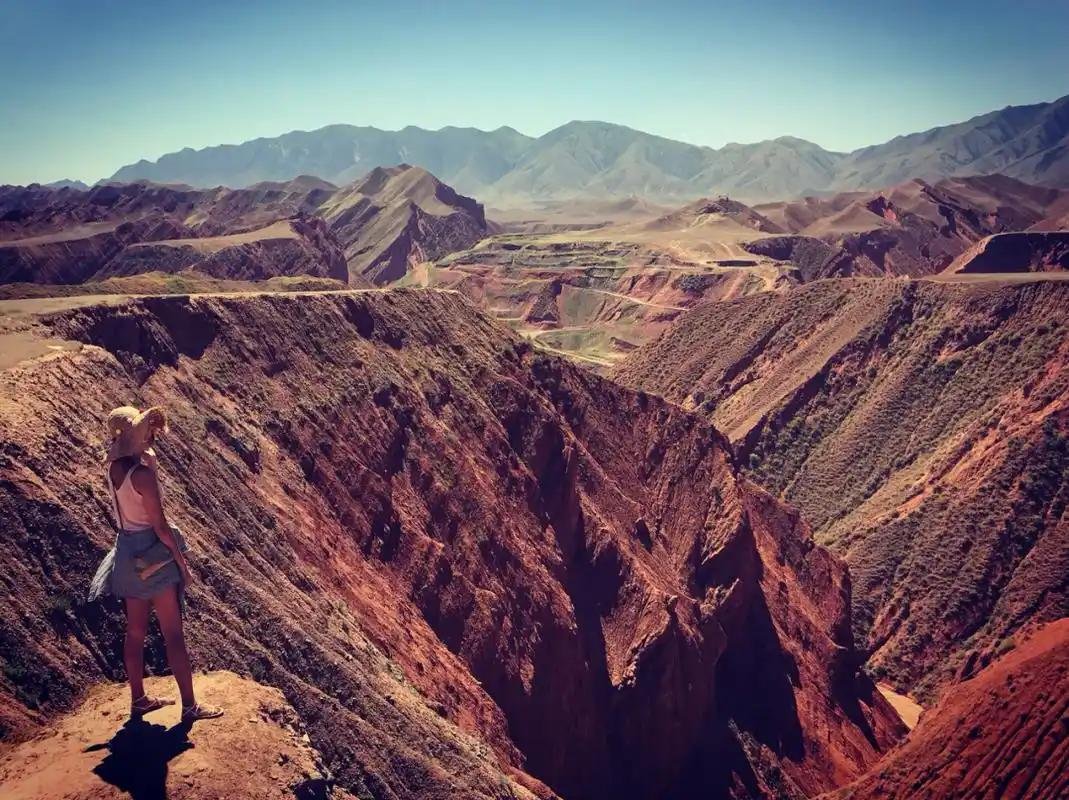
The Tianshan Grand Canyon, locals nickname it Ghost Canyon, is a sweep of rust-red sandstone carved into towers and slot passages. The wind moves through it like a held breath. I spent five hours inside and saw maybe a dozen other people. This is the anti-crowd Xinjiang.
Getting to the canyon from Aksu
The canyon lies about 70 km north of Aksu city, up a road that climbs from desert flatland into the mountain’s red skirt. I hired a car for the day; the driver waited while I hiked. Public transport is thin, so a private car or a tour from an Aksu hotel is the realistic play. Flights to Xinjiang land in Aksu too, if you’re building a southern loop.
Ticket and entry
- Entry is cheap by global standards, around 40 yuan when I went.
- The gate has a small museum on the geology. Worth ten minutes.
- Open roughly 9 to 7 in summer, shorter in winter.
The red rock formations
The first viewpoint drops your jaw. The rock runs from deep oxblood to soft pink, layered like a wedding cake someone kicked. Wind and water did the carving over millions of years, and the shapes read like castles, like animals, like faces if you squint. I kept finding new silhouettes the deeper I walked.
The canyon doesn’t perform for you. It just stands, and the longer you look, the more it shows.
Hiking the trails
There are marked loops and unmarked game paths. I took the main loop, about 7 km, moderate and well graded. Parts narrow into slot canyons where the sky becomes a blue ribbon overhead.
What to bring
- Two liters of water minimum. There’s none inside.
- Sturdy shoes. The sand is soft and the rock is loose in places.
- A hat and sunscreen. Shade is rare once you’re in.
- A phone with offline maps. Signal dies past the gate.
I met a herder near the back who offered me a slice of melon and pointed at an eagle riding the thermals. That’s the kind of moment the big sites package and sell. Here it was free.
Photography notes
The light is the trick. Midday washes the red flat; dawn and late afternoon set it on fire. I shot the slot canyon at 5 p.m. and the walls glowed like coal. A wide lens for the towers, a tight one for the eroded textures.
How to visit without a guide
You don’t need a guide for the main loop. But if you want the hidden chambers, hire a local at the gate. I did the loop solo and felt safe the whole way. Tell someone your plan and carry water. The Xinjiang travel tips that matter here are boring: hydrate, tell your driver when you’ll be back, don’t climb the crumbly walls.
Practical FAQ
Is it dangerous? Not the main loop. The loose rock and heat are the only real risks. Avoid storms; flash floods fill the slots fast.
How long to spend? Half a day for the loop, a full day if you explore side passages.
Can I camp? Not advised inside. Sleep in Aksu, where Xinjiang accommodation is cheap and plentiful.
Best season? Spring and autumn. Summer is brutally hot; winter can ice the upper paths.
Aksu town itself
Don’t write off the city. Aksu is a green, canal-laced place that feels almost oasis-like after the southern desert. I spent my evening along the central canal eating skewers and watching kids ride bikes. The night market does a fine hand-grabbed rice and a pepper chicken that woke me up properly. If you need a rest day between the canyon and the next leg, Aksu handles it well, with laundries, a good hospital, and trains north to Urumqi.
Why it fits a bigger plan
Aksu sits neatly on a southern arc: Kashgar to the west, Korla to the east, Hotan to the south. I used it as the western anchor of a loop that ran Kashgar, the KKH, then back east through Aksu and the canyon before dropping south to the desert highway. The Xinjiang travel tips that made this work were simple: never drive a long desert leg on empty, and always sleep low before a high one.
The canyon in different light
I nearly returned at noon the next day for contrast shots, and I’m glad I didn’t waste the fuel, because the canyon only sings at the edges of the day. If you can time your hike for late afternoon, do. The red deepens, the slots glow, and the tour buses are gone. Dawn is the other magic hour, cooler and emptier. Midday is for the museum and a long lunch.
The hidden chambers and a local guide
If the main loop leaves you wanting more, ask at the gate about a guide to the back chambers. I skipped this and regretted it only a little, because the photos of the narrow red corridors tempted me afterward. A local named Tursun offered to lead me in for 150 yuan, but I was out of water and out of daylight. Next time I’ll carry extra and go. The back passages open into rooms where the wind has sculpted faces and pillars, and the silence is deeper than on the loop. Bring a headlamp even if your guide has one. The slot passages go dark fast.
What to eat after the dust
Aksu rewards the hungry hiker. After the canyon I found a hole-in-the-wall doing ququ, the little hand-pinched pasta in a tomato broth, and it was the best bowl of my southern trip. The city’s night market also does a pepper lamb that numbs pleasantly. Xinjiang food in Aksu leans hearty, which is right after a day of red dust and climbing. Wash it down with the local yogurt drink and sleep early. The Tianshan gives, but it also takes a little out of your legs.
Final tips
Aksu is more than a transit blur. The Tianshan Grand Canyon earns a full day, and the city’s noodle stalls earn a happy belly after. I built it into a 7-day itinerary as a southern surprise and never regretted the chopstick drawing that sent me there. Go north from the desert and let the red walls do the rest.