

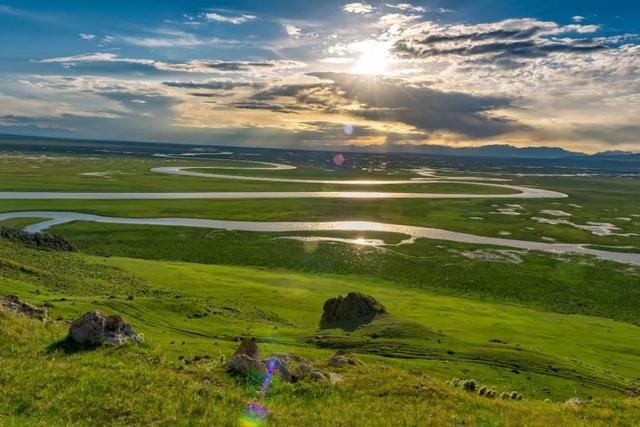
The road to Bayinbuluke climbs for what feels like forever, and then the land just opens – a high basin of water and grass where a river ties itself in knots. I did not expect to be out of breath at the viewpoint, and that was my first mistake.
The Nine-Turn River Viewpoint
The star here is the river that loops across the flat valley in a series of clean bends, best seen from a raised platform at sunset. I stood up there with a dozen other people and still felt alone, because the scale is so large the crowd shrinks to nothing. The water catches the last light and the bends glow orange, then red, then grey.
How to get the shot
- Arrive at least an hour before sunset; the good spots on the platform go early.
- Use a long lens if you have one; the bends are farther than they look.
- Stay until the light fully goes; the afterglow on the water is the real photo.
- Watch your step on the platform edge – it is high and the rail is low.
Swan Lake
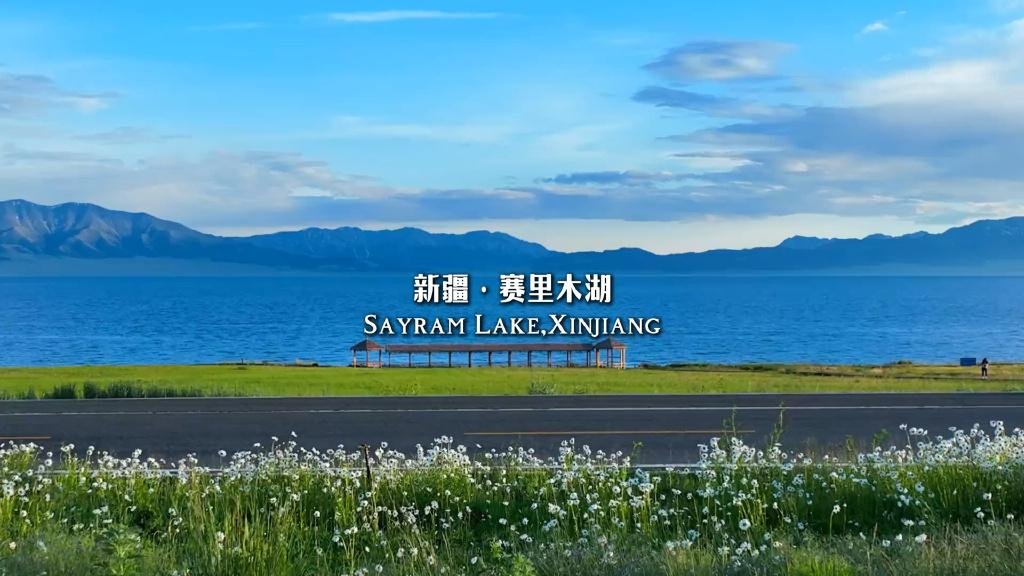
Despite the name, Swan Lake is less a single lake than a wetland where swans nest in summer. I visited in July and counted maybe forty birds across the reeds, plus the usual geese and cranes. The boardwalk keeps you back from the water, which is right; the birds are shy and the ground is soft.
When the swans show
The swans arrive in late spring and stay through summer, so time your trip for June or July if they are the point. I went in early July and caught them with young, which was worth the cold wind. By September they are gone and the wetland goes quiet and gold.
Altitude Caution
Bayinbuluke sits above 2,400 meters, and I felt it the moment I climbed the viewpoint stairs. My chest tightened and my head thumped, and a German traveler next to me sat down hard and laughed at himself. Take the altitude seriously.
Staying upright
- Arrive a day ahead if you can, or at least rest before the climb.
- Carry water and sip often; the dry air fools you into thinking you are fine.
- Skip the run up the stairs; walk the platform ramp slowly.
- If you feel dizzy, sit, breathe, and do not push to the top edge.
The bends will wait. The altitude will not forgive a careless climb, so give the viewpoint the slow respect it deserves.
How to Photograph It
Everyone wants the classic sunset bend shot, and you can get it, but the quieter images are the ones at the wetland boardwalk in morning light. I shot the river at dusk and the swans at dawn, and the dawn frames are the ones I print.
For the bends, a tripod helps because the light fades fast and you will want a long exposure as the water stills. I left mine in the car and regretted it; the hand-held shots are fine but soft, and the best frame of the trip is the one I cannot sharpen.
Getting There
Bayinbuluke is a long drive from anywhere, usually folded into a loop with the Ili valley or the southern Taklamakan route. Most people come from Sayram Lake or Nalati to the north, a half-day transfer across the mountains. I did it as part of a western swing that started with a flight into Urumqi, and the drive itself – over the snow-line pass – was a highlight.
On timing, the best time to visit Xinjiang for this basin is June through August, when the grass is green and the swans are in. September is quieter and golden but the birds have left.
What to Pack for the Basin
The weather swings hard up here, and the kit you bring decides whether you enjoy it. I learned this after a clear afternoon flipped to a sleet squall in twenty minutes and I had nothing but a t-shirt under a windbreaker.
- A real warm layer, not just a shell; the wind finds the gaps.
- Sunscreen and glasses; the reflection off the water is stronger than it looks.
- A thermos of hot tea for the sunset wait on the cold platform.
- Motion-sickness help if the mountain pass affects you; the road bends constantly.
Why the Basin Stays With You
I have seen louder sights, but few have stayed with me like Bayinbuluke. It is not one moment; it is the combination of thin air, wide water, and a strange silence of a place so large it swallows sound. On the drive out I kept checking the mirror, sure I had missed the bend everyone talks about, and then realized the whole basin was the bend.
If you go, resist the urge to tick the viewpoint and leave. The basin rewards a slow afternoon more than a quick sunrise. I sat by the wetland for an hour with nothing to photograph and came away with the clearest memory of the trip. The light moved, the swans dipped, and not once did I reach for my phone, which on the road is the rarest thing of all.
Practical FAQ
How high is it, really? Over 2,400 meters at the viewing area. Respect it.
One night or two? Two, if you want both the sunset bends and a dawn at the wetland.
Can I self-drive? Yes, the road is paved, but the pass is long; a tired driver is a risk at altitude.
Any Xinjiang travel tips? Pack for cold even in July, and book the in-park shuttle early – it sells out on weekends.
Final tip: build Bayinbuluke into a 7-day itinerary with Nalati and the Tex grassland rather than treating it as a detour. The three together are the real western Xinjiang, and the drive between them is half the fun.